Contents
Meaning
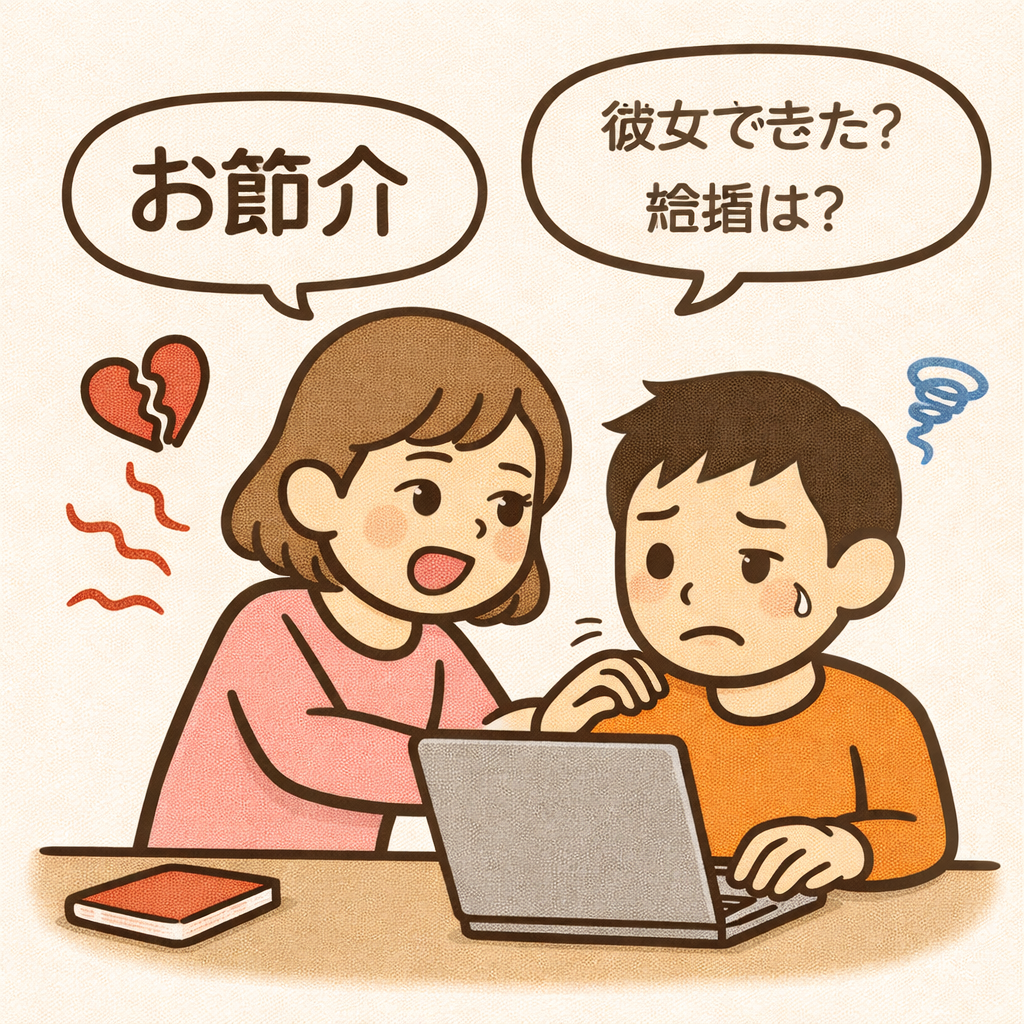
“お節介” (osekkai) is a Japanese term that refers to being overly helpful or meddlesome in other people’s affairs, often when your help or advice is not requested or wanted.
The word breaks down as:
- “お” (o) – an honorific prefix
- “節介” (sekkai) – meddling or interference
Key characteristics of osekkai:
Nuanced meaning: Osekkai occupies an interesting gray area between kindness and intrusion. It describes well-intentioned interference—someone trying to help, but overstepping boundaries or inserting themselves where they’re not needed.
Common situations:
- Giving unsolicited advice about personal matters (marriage, children, career)
- Trying to set up matches or arrange meetings without being asked
- Insisting on helping when someone has declined
- Interfering in someone else’s decisions or relationships
Cultural context: In Japanese society, which values personal space and reading social cues (kuuki wo yomu), osekkai behavior can be particularly awkward. While the person usually means well, their actions can be seen as intrusive or disrespectful of another’s autonomy.
English equivalents:
- “Being a busybody”
- “Meddling” or “meddlesome”
- “Sticking your nose in someone else’s business”
- “Overly helpful”
- “Interfering” or “intrusive”
Usage: The term can be used self-deprecatingly (“osekkai kamo shiremasen ga…” – “This might be meddling, but…”) or to describe others. Unlike pure criticism, it acknowledges the good intentions behind the unwanted help.
Example sentences
以下、「お節介」を使った例文20個を英訳付きでご紹介します。
- 彼女はお節介で、いつも人の恋愛に口を出してくる。 She’s meddlesome and always interferes in other people’s romantic lives.
- お節介かもしれませんが、その服装は面接に向いていないと思います。 This might be intrusive, but I don’t think that outfit is suitable for the interview.
- 余計なお節介だと言われても、友人のことが心配だった。 Even if it’s called unwanted meddling, I was worried about my friend.
- お節介なおばさんが結婚相手を紹介しようとしてくる。 A meddlesome aunt keeps trying to set me up with potential marriage partners.
- お節介を焼くのはやめてほしい。自分のことは自分で決める。 I wish you’d stop being a busybody. I’ll decide my own matters myself.
- 彼のお節介が時々うっとうしく感じる。 His meddling sometimes feels annoying.
- お節介と親切の境界線は難しい。 The boundary between meddling and kindness is difficult.
- お節介だと思われるかもしれないが、一言言わせてほしい。 You might think I’m interfering, but I’d like to say something.
- 母のお節介で、勝手に見合いの話を進められた。 Due to my mother’s meddling, she arranged an omiai (matchmaking meeting) without my permission.
- お節介な隣人が私の庭の手入れの仕方にまで口を出してくる。 My nosy neighbor even comments on how I maintain my garden.
- 善意のお節介だとわかっているが、放っておいてほしい。 I know it’s well-intentioned meddling, but I wish they’d leave me alone.
- お節介焼きの上司が部下のプライベートまで管理しようとする。 My meddlesome boss tries to manage even his subordinates’ private lives.
- お節介な親戚が「まだ結婚しないの?」と聞いてくる。 Intrusive relatives keep asking, “Aren’t you getting married yet?”
- 彼女は親切なのかお節介なのか、判断が難しい。 It’s hard to judge whether she’s being kind or meddlesome.
- お節介と思われたくないので、黙っていた。 I didn’t want to be seen as meddling, so I kept quiet.
- お節介なアドバイスは逆効果になることもある。 Unsolicited advice can sometimes be counterproductive.
- 姑のお節介に悩まされている。 I’m troubled by my mother-in-law’s meddling.
- お節介だと承知の上で言いますが、その仕事は辞めた方がいいと思います。 I’m aware this is interfering, but I think you should quit that job.
- 彼は自分がお節介だということに気づいていない。 He doesn’t realize that he’s being a busybody.
- お節介なおせっかいは迷惑だが、時には助かることもある。 Meddlesome interference is annoying, but sometimes it can be helpful.
これらの例文は、「お節介」という言葉のニュアンスと、日常生活での様々な使い方を示しています。良かれと思ってする行為が、時には迷惑になることを表現しています。
Conversation example
以下、「お節介」を使った会話例を英訳付きでご紹介します。
会話例1:友人同士
A: ねえ、最近彼氏とうまくいってないでしょ?いい人紹介しようか? A: Hey, things aren’t going well with your boyfriend lately, right? Want me to introduce you to someone nice?
B: いや、別に大丈夫だから。 B: No, I’m fine, really.
A: でも、あなたにぴったりの人がいるのよ。 A: But I know someone who’s perfect for you.
B: ごめん、それってちょっとお節介すぎない? B: Sorry, but isn’t that a bit too meddlesome?
A: あ、ごめん。余計なことだったね。 A: Oh, sorry. I was being intrusive.
会話例2:職場で
先輩: 君、最近残業が多いね。仕事のやり方を教えてあげようか? Senior: You’ve been working a lot of overtime lately. Want me to teach you a better way to work?
後輩: ありがとうございます。でも、自分のペースでやりたいので。 Junior: Thank you. But I’d like to work at my own pace.
先輩: そう?お節介だったかな。 Senior: Really? Was I being too meddlesome?
後輩: いえ、お気持ちは嬉しいです。困ったときは相談させてください。 Junior: No, I appreciate your concern. I’ll ask for advice if I need help.
会話例3:親子の会話
母: あなた、その髪型で面接に行くつもり?もっと短く切った方がいいわよ。 Mother: Are you planning to go to the interview with that hairstyle? You should cut it shorter.
息子: 自分で決めるから、いいよ。 Son: I’ll decide myself, it’s fine.
母: でも、印象が大事でしょう? Mother: But first impressions are important, aren’t they?
息子: お母さん、それお節介だよ。もう大人なんだから。 Son: Mom, that’s meddling. I’m an adult now.
母: ごめんね。心配だったの。 Mother: Sorry. I was just worried.
会話例4:ご近所同士
隣人A: お宅のお子さん、塾には通わせてないの?うちの子が通ってるところ、いいわよ。 Neighbor A: Your child isn’t going to cram school? The one my child attends is great.
隣人B: いえ、今のところ考えていないんです。 Neighbor B: No, we’re not considering it at the moment.
隣人A: でも、受験のこと考えたら早い方がいいわよ。紹介しましょうか? Neighbor A: But considering entrance exams, the earlier the better. Shall I introduce you?
隣人B: (心の中で)ちょっとお節介すぎるな… Neighbor B: (Thinking) That’s a bit too intrusive…
会話例5:同僚との会話
田中: 山田さん、お弁当じゃなくてまたコンビニ?健康に悪いよ。 Tanaka: Yamada-san, convenience store food again instead of a bento? That’s bad for your health.
山田: 忙しくて作る時間がないんです。 Yamada: I’m too busy to make lunch.
田中: 週末に作り置きすればいいじゃない。レシピ教えてあげようか? Tanaka: You could meal prep on the weekend. Want me to teach you some recipes?
山田: お節介かもしれませんが、それは大きなお世話です。 Yamada: You might mean well, but that’s really none of your business.
会話例6:結婚のプレッシャー
おばさん: あら、もう30歳?結婚はまだなの? Aunt: Oh my, you’re 30 already? Still not married?
姪: ええ、まだです。 Niece: No, not yet.
おばさん: 知り合いのいい息子さんがいるのよ。会ってみない? Aunt: I know a nice young man. Would you like to meet him?
姪: いえ、大丈夫です。 Niece: No, I’m fine, thank you.
おばさん: お節介だと思われるかもしれないけど、あなたのためを思って。 Aunt: You might think I’m meddling, but I’m thinking of what’s best for you.
姪: お気持ちは嬉しいですが、自分で何とかします。 Niece: I appreciate your concern, but I’ll handle it myself.
会話例7:自己反省
A: さっき、ちょっとお節介すぎたかな。 A: I think I was a bit too meddlesome earlier.
B: え、何のこと? B: Huh? What do you mean?
A: 君の仕事のやり方にあれこれ口出ししちゃって。 A: I kept interfering with how you do your work.
B: ああ、気にしてないよ。アドバイスとして聞いておくよ。 B: Oh, I don’t mind. I’ll take it as advice.
A: ありがとう。でも、次からは聞かれたときだけ言うようにするよ。 A: Thanks. But from now on, I’ll only say something when asked.
会話例8:友人を心配して
佐藤: お節介だと思われるかもしれないけど、言わせて。 Sato: You might think I’m being intrusive, but let me say this.
鈴木: 何? Suzuki: What?
佐藤: 最近、飲みすぎじゃない?体調心配してるんだ。 Sato: Haven’t you been drinking too much lately? I’m worried about your health.
鈴木: …ありがとう。実は自分でも気になってたんだ。 Suzuki: …Thanks. Actually, I’ve been concerned about it myself.
佐藤: それなら良かった。必要なら力になるよ。 Sato: I’m glad to hear that. I’m here if you need support.
会話例9:職場の先輩後輩
後輩: 先輩、お節介かもしれませんが、その資料に誤字があります。 Junior: Senior, this might be meddling, but there’s a typo in that document.
先輩: え、本当?どこ? Senior: Really? Where?
後輩: ここです。提出前に気づいて良かったですね。 Junior: Here. I’m glad I noticed before you submitted it.
先輩: ありがとう!それはお節介じゃなくて、助かったよ。 Senior: Thank you! That’s not meddling at all, you really helped me out.
会話例10:夫婦の会話
夫: また俺の服を勝手に捨てたのか? Husband: Did you throw away my clothes again without asking?
妻: だってもうボロボロだったから。新しいの買ったわよ。 Wife: Because they were completely worn out. I bought you new ones.
夫: それって完全にお節介だよ。自分の服くらい自分で管理させて。 Husband: That’s completely meddlesome. Let me manage my own clothes.
妻: ごめんなさい。良かれと思ったんだけど。 Wife: I’m sorry. I thought I was doing something good.
夫: 気持ちは分かるけど、次からは聞いてからにして。 Husband: I understand your intentions, but please ask me next time.
これらの会話例は、「お節介」が使われる様々なシチュエーションを示しています。善意からの行動が、時に相手にとって迷惑になる微妙なニュアンスが表現されています。
