Contents
Meaning
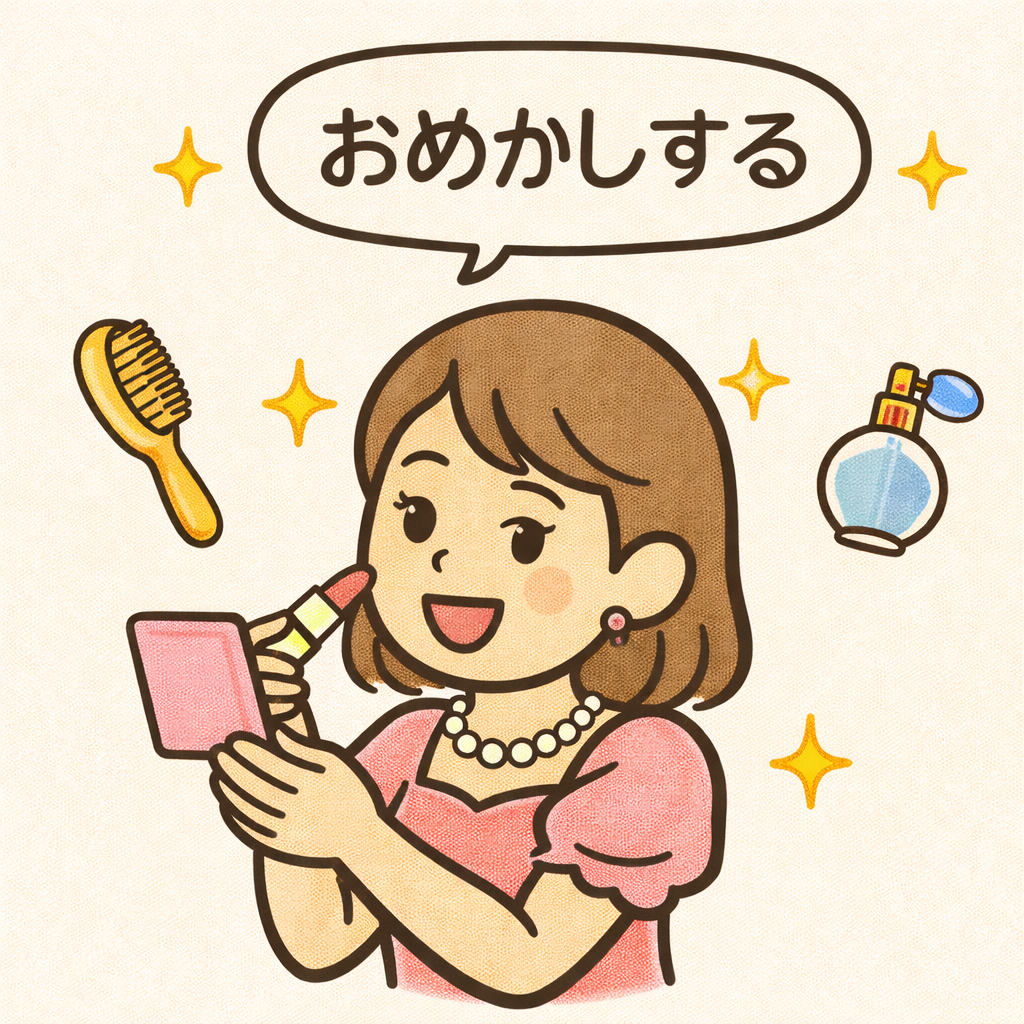
“おめかしする” (omekashi suru) is a Japanese expression that means to dress up nicely or get dolled up, typically for a special occasion or outing.
The word breaks down as:
- “お” (o) – an honorific prefix that adds politeness
- “めかし” (mekashi) – from the verb “めかす” (mekasu), meaning to dress up or adorn oneself
- “する” (suru) – to do
Key characteristics:
Nuanced meaning: Omekashi has a light, cheerful, and somewhat playful connotation. It implies putting extra effort into one’s appearance beyond everyday grooming—wearing nicer clothes, doing hair and makeup more carefully, and paying attention to accessories and overall presentation.
Common situations:
- Getting dressed up for a date, party, or special event
- Putting on nice clothes for going out to a fancy restaurant
- Children being dressed up nicely by their parents
- Making yourself presentable for an important occasion
Tone: The term carries a positive, endearing quality. It’s often used to describe the act of making oneself look attractive or presentable in a way that shows care and effort, but without being overly formal or serious.
Who uses it: While anyone can use this term, it’s particularly common when:
- Describing children being dressed up (“子供をおめかしさせる”)
- Women talking about getting ready for an occasion
- Speaking in a casual, friendly tone about appearance
English equivalents:
- “To dress up”
- “To get dolled up”
- “To spruce oneself up”
- “To make oneself look nice”
- “To get all dressed up”
- “To put on one’s Sunday best”
Usage note: Unlike more formal terms like “正装する” (seisō suru – to dress formally), omekashi has a lighter, more casual feeling and emphasizes the enjoyable aspect of looking nice rather than formal obligation.
Example sentences
以下、「おめかしする」を使った例文20個を英訳付きでご紹介します。
- 今日はデートだから、おめかしして出かけた。 I have a date today, so I dressed up nicely before going out.
- 娘を可愛くおめかしさせて、結婚式に連れて行った。 I dolled up my daughter adorably and took her to the wedding.
- 久しぶりにおめかしして、友達とランチに行く。 I’m going to dress up for the first time in a while and have lunch with friends.
- お正月は着物でおめかしするのが楽しみだ。 I look forward to dressing up in a kimono for New Year’s.
- 子供たちが発表会のためにおめかししている姿が可愛い。 The children look adorable all dressed up for their recital.
- 彼女はいつもおめかしして会社に来る。 She always comes to the office dressed nicely.
- おめかしして写真を撮ってもらった。 I got dressed up and had my photo taken.
- パーティーに行くから、今日はちょっとおめかししよう。 I’m going to a party, so I’ll dress up a bit today.
- 犬におめかしをさせて、ドッグカフェに行った。 I dressed up my dog and went to a dog café.
- せっかくの休日だから、おめかしして街に繰り出した。 Since it’s a precious day off, I dressed up nicely and went out on the town.
- 娘は鏡の前でおめかしするのが大好きだ。 My daughter loves getting dolled up in front of the mirror.
- おめかしして高級レストランでディナーを楽しんだ。 We dressed up and enjoyed dinner at an upscale restaurant.
- 孫をおめかしさせて、お宮参りに行った。 We dressed up our grandchild and went to the shrine for their blessing ceremony.
- たまにはおめかしして、自分にご褒美をあげたい。 Sometimes I want to dress up nicely and treat myself.
- おめかしした姿を見て、夫が驚いていた。 My husband was surprised to see me all dressed up.
- 特別な日はおめかしするのが楽しい。 It’s fun to dress up on special days.
- 彼はおめかしして、プロポーズに臨んだ。 He dressed up nicely and went to propose.
- 娘が初めてのデートでおめかしする姿に感動した。 I was moved seeing my daughter dress up for her first date.
- おめかしして出かけると、気分が上がる。 When I dress up and go out, my mood lifts.
- 猫におめかしをさせて、SNSに写真を投稿した。 I dressed up my cat and posted photos on social media.
これらの例文は、「おめかしする」という言葉の様々な使い方を示しています。特別な日や外出時に、普段より気を配って身だしなみを整える様子が表現されています。
Conversation example
以下、「おめかしする」を使った会話例を英訳付きでご紹介します。
会話例1:母と娘
母: 今日は結婚式だから、早くおめかししなさい。 Mother: We have a wedding today, so hurry up and get dressed up.
娘: どのドレスを着ればいいかな? Daughter: Which dress should I wear?
母: ピンクのワンピースが可愛いわよ。 Mother: The pink dress would look adorable.
娘: わかった!リボンもつけていい? Daughter: Okay! Can I wear a ribbon too?
母: もちろん。たくさんおめかしして、可愛くしましょうね。 Mother: Of course. Let’s get you all dolled up and make you look cute.
会話例2:友人同士
A: 今日のランチ、どこ行く? A: Where should we go for lunch today?
B: あの新しいフレンチレストラン、どう? B: How about that new French restaurant?
A: いいね!じゃあちょっとおめかししていこうか。 A: Sounds good! Then let’s dress up a bit.
B: うん、久しぶりにおしゃれして出かけたいな。 B: Yeah, I want to dress nicely and go out for the first time in a while.
A: 30分後に駅で待ち合わせね。 A: Let’s meet at the station in 30 minutes.
会話例3:夫婦の会話
妻: ねえ、今日はどこか出かけない? Wife: Hey, want to go out somewhere today?
夫: いいね。どこ行きたい? Husband: Sure. Where do you want to go?
妻: 久しぶりにちゃんとおめかしして、デートしたいな。 Wife: I want to dress up nicely and go on a proper date for the first time in a while.
夫: それいいね。じゃあ、夜景がきれいなレストランを予約しようか。 Husband: That’s a great idea. Then should I make a reservation at a restaurant with a nice night view?
妻: 嬉しい!今からワクワクするわ。 Wife: I’m so happy! I’m excited already.
会話例4:職場の会話
同僚A: あれ、今日はおめかししてますね。何かあるんですか? Colleague A: Oh, you’re all dressed up today. Is there something special?
同僚B: 実は仕事の後にパーティーがあって。 Colleague B: Actually, I have a party after work.
同僚A: いいですね!楽しんできてください。 Colleague A: How nice! Have a great time.
同僚B: ありがとうございます。たまにはこういう日も必要ですよね。 Colleague B: Thank you. I need days like this once in a while.
会話例5:祖母と孫
祖母: まあ、可愛い!今日はおめかししてるのね。 Grandmother: Oh my, how cute! You’re all dressed up today.
孫: うん!ピアノの発表会なの。 Grandchild: Yes! I have a piano recital.
祖母: 素敵なドレスね。誰が選んだの? Grandmother: What a lovely dress. Who picked it out?
孫: ママと一緒に選んだの。 Grandchild: I picked it out with Mom.
祖母: とってもお似合いよ。頑張ってね。 Grandmother: It suits you perfectly. Do your best!
会話例6:ペットショップで
店員: 今日はトリミングとおめかしコースですね。 Staff: Today you’re getting the grooming and dress-up course.
飼い主: はい。来週誕生日なので、可愛くしてあげたくて。 Owner: Yes. It’s his birthday next week, so I want to make him look cute.
店員: わかりました。リボンと首輪の色はどうしますか? Staff: Understood. What color would you like for the ribbon and collar?
飼い主: ピンクでお願いします。 Owner: Pink, please.
店員: 可愛くおめかしさせていただきますね。 Staff: We’ll make him look adorably dressed up.
会話例7:デート前
彼氏: もう準備できた? Boyfriend: Are you ready yet?
彼女: あと10分待って!今おめかししてるところだから。 Girlfriend: Give me 10 more minutes! I’m still getting dressed up.
彼氏: いつもより気合い入ってるね。 Boyfriend: You’re putting in more effort than usual.
彼女: だって今日は特別な日でしょ? Girlfriend: Well, today’s a special day, isn’t it?
彼氏: そうだね。楽しみにしてるよ。 Boyfriend: That’s right. I’m looking forward to it.
会話例8:姉妹の会話
姉: 妹、今日やけにおめかししてるじゃん。どうしたの? Older sister: Little sis, you’re really dressed up today. What’s going on?
妹: 実は…気になる人とご飯に行くの。 Younger sister: Actually… I’m going to dinner with someone I like.
姉: え〜!それは気合い入るわ。メイク手伝おうか? Older sister: Oh! No wonder you’re putting in effort. Want me to help with your makeup?
妹: 本当?お願い! Younger sister: Really? Yes please!
姉: 任せて。可愛くおめかしさせてあげる。 Older sister: Leave it to me. I’ll get you all dolled up.
会話例9:子供同士
子供A: わあ、可愛い服!今日おめかししてるね。 Child A: Wow, cute outfit! You’re all dressed up today.
子供B: うん、おばあちゃんの家に行くの。 Child B: Yeah, I’m going to my grandma’s house.
子供A: いいな〜。私も可愛い服着たいな。 Child A: Lucky! I want to wear cute clothes too.
子供B: 今度一緒におめかしして遊ぼうよ! Child B: Let’s dress up and play together next time!
子供A: やった!楽しみ! Child A: Yay! I can’t wait!
会話例10:美容院で
美容師: 今日は何か特別な予定があるんですか? Hairstylist: Do you have any special plans today?
客: ええ、夜に同窓会があって。 Customer: Yes, I have a class reunion tonight.
美容師: それなら、しっかりおめかしできるようにセットしますね。 Hairstylist: Then I’ll style your hair so you’ll be nicely dressed up.
客: お願いします。久しぶりに会う人たちなので。 Customer: Please do. It’s been a while since I’ve seen these people.
美容師: わかりました。素敵に仕上げますよ。 Hairstylist: Got it. I’ll make you look wonderful.
会話例11:写真館で
スタッフ: 今日は七五三の撮影ですね。 Staff: Today we’re doing a Shichi-Go-San photo shoot.
母親: はい。朝から張り切っておめかししてきました。 Mother: Yes. We’ve been excitedly getting dressed up since this morning.
スタッフ: とても可愛いお着物ですね。 Staff: What a lovely kimono.
子供: ママが選んでくれたの! Child: Mommy picked it out for me!
スタッフ: では、たくさん可愛い写真を撮りましょうね。 Staff: Well then, let’s take lots of cute photos.
会話例12:カップルの会話
彼女: 今日のパーティー、何着ていく? Girlfriend: What should I wear to the party today?
彼氏: 好きなの着ればいいよ。 Boyfriend: Wear whatever you like.
彼女: でも、あなたの友達に会うでしょ?ちゃんとおめかししたいの。 Girlfriend: But I’m meeting your friends, right? I want to dress up properly.
彼氏: いつも可愛いから大丈夫だよ。 Boyfriend: You’re always cute, so don’t worry.
彼女: もう、ちゃんと考えてよ! Girlfriend: Come on, take this seriously!
これらの会話例は、「おめかしする」が使われる様々な日常シーンを示しています。特別な日や外出の際に、楽しみながら身だしなみを整える様子が表現されています。
