Contents
Meaning
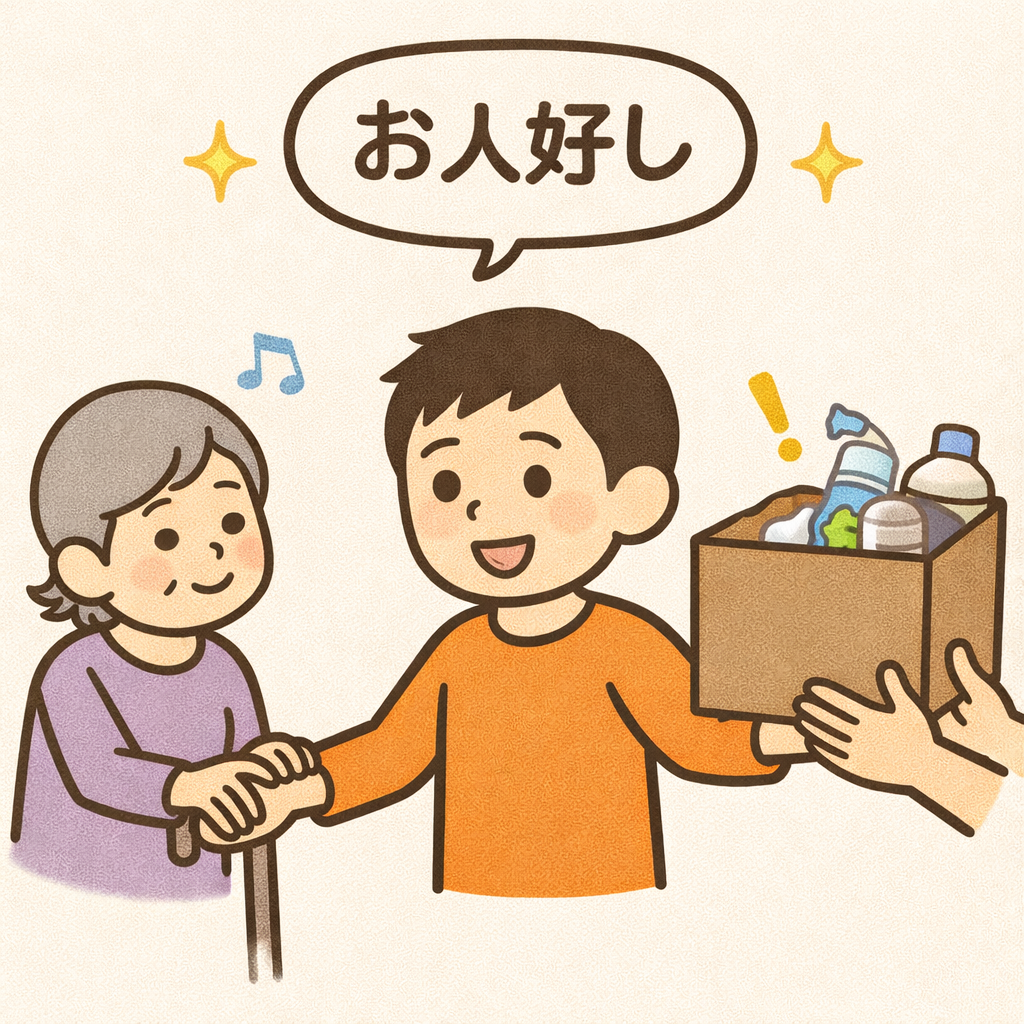
「お人好し」は日本語で特定の性格タイプを表す表現です。
英語での説明:
“お人好し” (o-hito-yoshi) means “a good-natured person” or “someone who is too nice for their own good.”
This term describes someone who:
- Is kind and generous, often excessively so
- Has difficulty saying “no” to others
- Is easily taken advantage of due to their kindness
- Tends to trust people too readily
- Puts others’ needs before their own, sometimes to their own detriment
English equivalents:
- “too good-natured”
- “a pushover”
- “overly trusting”
- “a soft touch”
- “naive” (in some contexts)
Key nuance: While the term acknowledges the person’s kindness, it often carries a slightly negative or pitying connotation, suggesting that their excessive goodness causes them problems. They may be exploited, deceived, or taken advantage of because they’re too trusting or can’t refuse requests.
Example in context: “彼はお人好しだから、すぐに騙される” = “He’s too good-natured, so he gets deceived easily”
The term sits somewhere between praise for kindness and criticism for lack of self-protection or discernment.
Example sentences
「お人好し」の例文20個を英訳付きで作成します。
1. 彼はお人好しだから、頼まれると断れない性格だ。 He’s too good-natured, so he can’t refuse when people ask him for favors.
2. お人好しすぎて、よく詐欺に引っかかりそうになる。 He’s such a soft touch that he almost falls for scams frequently.
3. あの人はお人好しで、誰にでも親切にする。 That person is good-natured and kind to everyone.
4. お人好しな性格を利用されて、お金を貸してしまった。 His good nature was exploited, and he ended up lending money.
5. 彼女はお人好しだから、いつも損をしている。 She’s too nice for her own good, so she always ends up at a disadvantage.
6. お人好しと言われても、人を疑うことができない。 Even though people call me naive, I can’t bring myself to distrust others.
7. そんなお人好しでは、ビジネスの世界では生き残れないよ。 Being such a pushover, you won’t survive in the business world.
8. 彼はお人好しで知られていて、村の人々に愛されている。 He’s known for being good-natured and is beloved by the villagers.
9. お人好しな上司は、部下の言い訳をいつも信じてしまう。 Our good-natured boss always believes his subordinates’ excuses.
10. あまりお人好しすぎると、周りの人に利用されるよ。 If you’re too much of a soft touch, people around you will take advantage of you.
11. 彼のお人好しな性格が、時には問題を引き起こす。 His overly trusting nature sometimes causes problems.
12. お人好しだと思われたくないから、時には厳しくする。 I don’t want to be seen as a pushover, so sometimes I’m strict.
13. 母はお人好しで、近所の人の頼みを断ったことがない。 My mother is so good-natured that she’s never refused a neighbor’s request.
14. お人好しな友人が、また怪しい投資話に乗せられている。 My naive friend has been taken in by another suspicious investment scheme.
15. 彼はお人好しというより、単純なだけだ。 He’s not so much good-natured as he is just simple-minded.
16. お人好しな性格のおかげで、多くの友人に恵まれている。 Thanks to his good-natured personality, he’s blessed with many friends.
17. お人好しすぎるのも考えもので、時には警戒心が必要だ。 Being too trusting is problematic; sometimes you need to be cautious.
18. 祖父はお人好しで、誰かが困っていると放っておけない。 My grandfather is good-natured and can’t ignore anyone in trouble.
19. お人好しな彼は、同僚の仕事まで引き受けてしまう。 Being such a pushover, he ends up taking on his colleagues’ work too.
20. お人好しだからといって、馬鹿にされるいわれはない。 Just because someone is good-natured doesn’t mean they deserve to be made a fool of.
これらの例文は、「お人好し」という言葉の肯定的な面と否定的な面の両方を示しています。
Conversation example
「お人好し」を使った会話例を英訳付きで作成します。
会話例1:友人同士の心配
A:ねえ、聞いた?田中さん、また同僚にお金貸したらしいよ。 A: Hey, did you hear? Tanaka lent money to a coworker again.
B:えー、また?前も返してもらえなかったのに。 B: What? Again? He didn’t get paid back last time either.
A:本当にお人好しだよね。断ればいいのに。 A: He’s really too good-natured. He should just say no.
B:優しいのはいいけど、自分のことも考えないとね。 B: Being kind is good, but he needs to think about himself too.
A:今度会ったら、ちゃんと注意してあげよう。 A: Next time we see him, let’s give him a proper warning.
会話例2:職場での会話
上司:佐藤くん、また残業してるの?今週で3日目だよ。 Boss: Sato, are you working overtime again? That’s the third day this week.
佐藤:はい、山田さんの仕事を手伝っていまして… Sato: Yes, I’m helping Yamada with his work…
上司:君はお人好しすぎるよ。自分の仕事だけで十分大変なのに。 Boss: You’re too much of a pushover. Your own work is hard enough already.
佐藤:でも、困っているみたいでしたから… Sato: But he seemed to be in trouble…
上司:親切なのはいいことだけど、時には断ることも必要だよ。 Boss: Being kind is good, but sometimes you need to refuse.
会話例3:夫婦の会話
妻:あなた、また隣の奥さんの買い物に付き合ったの? Wife: Honey, did you accompany the neighbor’s wife shopping again?
夫:うん、重い荷物があるって言うから手伝ってあげたんだ。 Husband: Yeah, she said she had heavy bags, so I helped her.
妻:あなたってほんとお人好しね。週末くらい家でゆっくりすればいいのに。 Wife: You’re really too good-natured. You should relax at home on weekends.
夫:困ってる人を見ると放っておけなくてさ。 Husband: I just can’t ignore people in trouble.
妻:それはいいところだけど、たまには自分の時間も大切にしてね。 Wife: That’s a good quality, but sometimes value your own time too.
会話例4:親子の会話
娘:お母さん、クラスの子にノート貸してって言われて断れなかった… Daughter: Mom, a classmate asked to borrow my notes and I couldn’t refuse…
母:またなの?先週も教科書貸してたじゃない。 Mother: Again? You lent your textbook last week too, didn’t you?
娘:だって、困ってるって言われると… Daughter: But when they say they’re in trouble…
母:優しいのはいいけど、お人好しすぎるのも問題よ。自分のことを第一に考えなさい。 Mother: Being kind is good, but being too much of a soft touch is also a problem. Put yourself first.
娘:うん、わかった。次からは気をつける。 Daughter: Okay, I understand. I’ll be more careful from now on.
会話例5:同僚同士の忠告
A:鈴木さん、さっきの会議で全部引き受けちゃったけど、大丈夫? A: Suzuki, you took on everything in that meeting. Are you okay?
鈴木:まあ、なんとかなると思います。 Suzuki: Well, I think I’ll manage somehow.
A:あのね、お人好しにも限度があるよ。無理しすぎないで。 A: Listen, there’s a limit to being good-natured. Don’t push yourself too hard.
鈴木:でも、誰かがやらないといけないから… Suzuki: But someone has to do it…
A:それはそうだけど、いつも君ばかりじゃない。たまには断ることも覚えないと、体壊すよ。 A: That’s true, but it’s always you. If you don’t learn to say no sometimes, you’ll ruin your health.
鈴木:ありがとう。気をつけます。 Suzuki: Thanks. I’ll be careful.
会話例6:先輩後輩の会話
後輩:先輩、また飲み会の幹事引き受けたんですか? Junior: Senpai, did you take on organizing the drinking party again?
先輩:ああ、誰もやりたがらなかったからね。 Senior: Yeah, nobody else wanted to do it.
後輩:先輩、お人好しすぎますよ。もう今年4回目じゃないですか。 Junior: Senpai, you’re too much of a pushover. Isn’t this the fourth time this year?
先輩:まあ、慣れてるし、みんなが楽しんでくれれば嬉しいから。 Senior: Well, I’m used to it, and I’m happy if everyone enjoys themselves.
後輩:その気持ちは素敵ですけど、たまには他の人にも任せましょうよ。 Junior: That’s a nice sentiment, but let’s have others do it sometimes too.
会話例7:祖父母と孫の会話
孫:おじいちゃん、また近所の人に野菜あげちゃったの? Grandchild: Grandpa, did you give vegetables to the neighbors again?
祖父:ああ、たくさん採れたからな。みんなで分け合わないと。 Grandfather: Yeah, we had a big harvest. We have to share with everyone.
孫:でも、自分たちの分も必要でしょ? Grandchild: But don’t we need some for ourselves?
祖母:おじいちゃんは昔からお人好しなのよ。人が喜ぶ顔を見るのが好きなの。 Grandmother: Grandpa has always been good-natured. He loves seeing people happy.
祖父:困った時はお互い様だからな。 Grandfather: When someone’s in trouble, we help each other.
孫:そういうところ、尊敬するけど、ちゃんと自分のことも考えてね。 Grandchild: I respect that about you, but think about yourself properly too.
これらの会話例は、「お人好し」という言葉がさまざまな人間関係や場面でどのように使われるかを示しています。肯定的な文脈と心配する文脈の両方が含まれています。
