Contents
Meaning
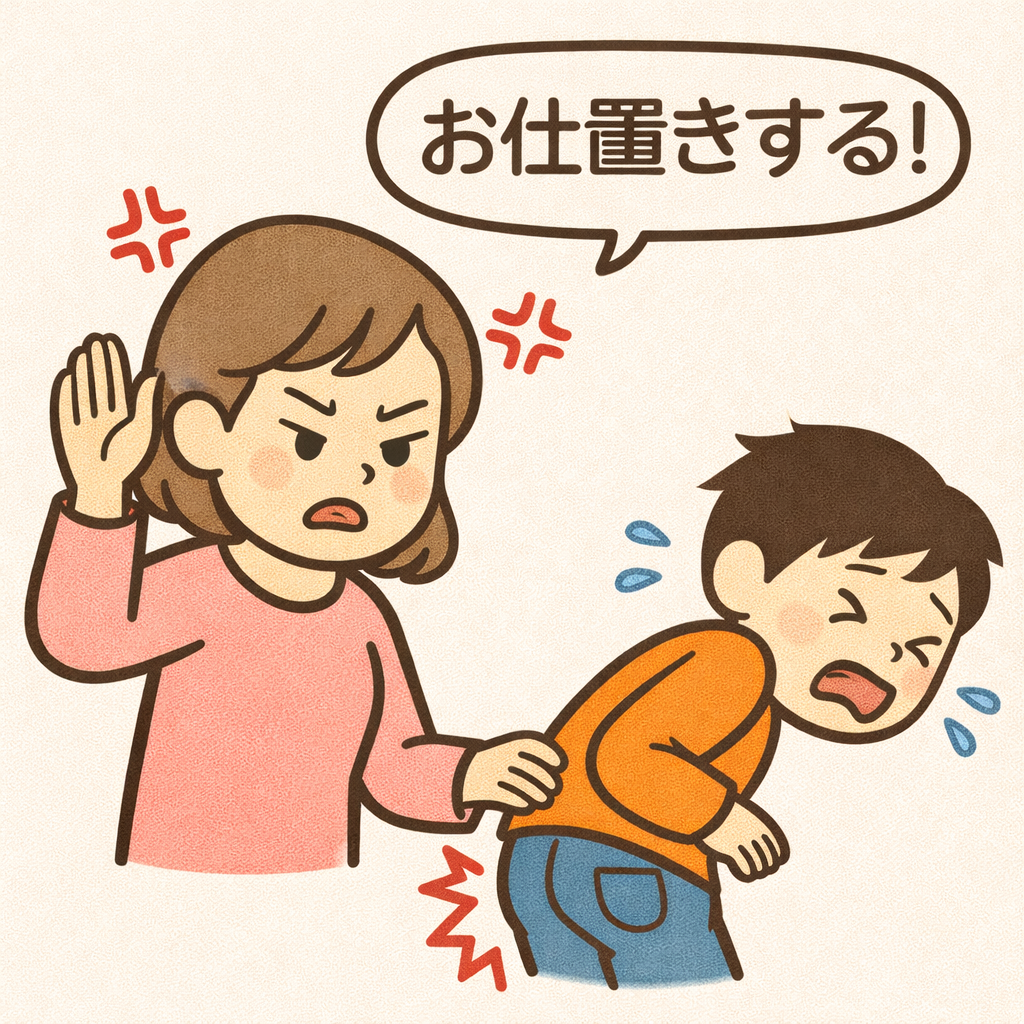
「お仕置きする」は日本語で punishment や discipline を意味する表現です。
英語での説明:
“お仕置きする” (oshioki suru) means “to punish” or “to discipline someone.”
This phrase is used when someone corrects bad behavior, typically:
- Parents disciplining their children for misbehavior
- Teachers correcting students
- Giving someone a penalty or consequence for doing something wrong
The word has a slightly old-fashioned or traditional feel to it. It implies administering punishment with the intention of teaching a lesson or correcting behavior, rather than just causing harm.
Examples in context:
- “悪いことをしたから、お仕置きが必要だ” = “You need to be punished because you did something bad”
- Used when someone deserves consequences for their actions
The phrase can range from mild scolding to more serious disciplinary action, depending on the context. In modern casual conversation, people might also use it playfully or lightheartedly.
Example sentences
「お仕置きする」の例文20個を英訳付きで作成します。
1. 子どもが嘘をついたので、お仕置きとしてゲームを禁止した。 I punished my child for lying by banning video games.
2. 宿題を忘れた生徒にお仕置きとして掃除当番を命じた。 I disciplined the student who forgot their homework by assigning them cleaning duty.
3. いたずらばかりするから、今日はお仕置きが必要ね。 You’ve been naughty all day, so you need to be punished today.
4. 悪いことをしたら、きちんとお仕置きしなければならない。 When someone does something wrong, they must be properly disciplined.
5. 約束を破ったから、お仕置きとして一週間外出禁止よ。 You broke your promise, so as punishment you’re grounded for a week.
6. お母さんにお仕置きされて、反省している様子だった。 He looked repentant after being punished by his mother.
7. また同じ過ちを繰り返したら、厳しくお仕置きするからね。 If you make the same mistake again, I’ll punish you severely.
8. 先生は授業中に騒いだ生徒をお仕置きした。 The teacher disciplined the students who were noisy during class.
9. お仕置きは愛情の表れだと父は言っていた。 My father used to say that discipline is an expression of love.
10. ペットが悪さをしたとき、どうやってお仕置きすればいいですか? How should I discipline my pet when it misbehaves?
11. 子どもの頃、悪いことをするとよくお仕置きされたものだ。 When I was a child, I was often punished for doing bad things.
12. お仕置きとして、今週のお小遣いはなしです。 As punishment, you won’t get any allowance this week.
13. あまり厳しくお仕置きすると、子どもが萎縮してしまう。 If you punish children too harshly, they’ll become timid.
14. 彼女は冗談で「お仕置きが必要ね」と笑って言った。 She jokingly said with a laugh, “You need to be punished.”
15. 部屋を散らかしたままにしたので、お仕置きとして片付けさせた。 I disciplined him by making him clean up since he left his room messy.
16. 昔はお仕置きが厳しかったが、今はもっと優しい方法がある。 Discipline used to be strict, but now there are gentler methods.
17. お仕置きの後は、必ず理由を説明することが大切だ。 After punishment, it’s important to always explain the reason.
18. 兄が妹をいじめたので、父がお仕置きをした。 Father punished my brother for bullying his sister.
19. お仕置きされて泣いている子どもを慰めるのは難しい。 It’s difficult to comfort a child who’s crying after being punished.
20. 時には厳しくお仕置きすることも、親の責任だ。 Sometimes punishing strictly is also a parent’s responsibility.
これらの例文は、家庭や学校などさまざまな場面での「お仕置き」の使い方を示しています。
Conversation example
「お仕置きする」を使った会話例を英訳付きで作成します。
会話例1:母親と子ども
母:太郎、また部屋を散らかして!何度言ったらわかるの? Mom: Taro, you’ve made a mess of your room again! How many times do I have to tell you?
太郎:ごめんなさい、お母さん… Taro: I’m sorry, Mom…
母:ごめんなさいだけじゃ済まないわよ。今日はお仕置きとしてゲーム禁止です。 Mom: Just saying sorry isn’t enough. As punishment, no video games today.
太郎:えー!そんな… Taro: What?! No way…
母:自分がしたことの責任を取りなさい。 Mom: Take responsibility for what you did.
会話例2:友人同士の冗談
A:昨日、デートの約束すっぽかしちゃってさ… A: Yesterday, I stood up my date…
B:えっ、マジで?それはひどいね。 B: What? Seriously? That’s terrible.
A:彼女、めちゃくちゃ怒ってて。 A: She’s really angry with me.
B:そりゃそうだよ。お仕置きされても文句言えないよ。 B: Of course she is. You can’t complain even if she punishes you.
A:うん、覚悟してる。今から謝りに行くよ。 A: Yeah, I’m prepared. I’m going to apologize to her now.
会話例3:職場での会話
上司:田中君、また報告書の提出が遅れているね。 Boss: Tanaka, your report submission is late again.
田中:申し訳ございません。今回は体調が… Tanaka: I apologize. This time I wasn’t feeling well…
上司:事情は分かるが、これで3回目だ。お仕置きというわけではないが、次のプロジェクトからは補佐をつけることにする。 Boss: I understand the circumstances, but this is the third time. It’s not exactly punishment, but from the next project, I’ll assign you an assistant.
田中:はい、ご迷惑をおかけして本当に申し訳ありません。 Tanaka: Yes, I’m truly sorry for the inconvenience.
会話例4:祖母と孫
孫:おばあちゃん、お父さんに怒られちゃった。 Grandchild: Grandma, I got scolded by Dad.
祖母:あら、何をしたの? Grandma: Oh my, what did you do?
孫:宿題しないでゲームばっかりしてた。 Grandchild: I was playing games instead of doing my homework.
祖母:それはお仕置きされても仕方ないわね。でも、お父さんはあなたのことを思ってのことよ。 Grandma: Well then, you can’t complain about being punished. But your father did it because he cares about you.
孫:うん、分かってる。明日からちゃんとやるよ。 Grandchild: Yeah, I know. I’ll do it properly from tomorrow.
会話例5:夫婦の会話
妻:ねえ、あなた。また飲み会で終電逃したの? Wife: Hey, honey. Did you miss the last train at a drinking party again?
夫:ごめん…ついつい盛り上がっちゃって。 Husband: Sorry… We got carried away.
妻:もう!お仕置きとして、今週末の釣り旅行は中止よ。 Wife: Seriously! As punishment, your fishing trip this weekend is canceled.
夫:え、それは勘弁してよ! Husband: What? Please, not that!
妻:じゃあ、次からは気をつけてね。 Wife: Then be careful from now on.
夫:はい、約束します… Husband: Yes, I promise…
会話例6:先生と生徒
先生:山田くん、また授業中に居眠りしていたね。 Teacher: Yamada, you were sleeping in class again.
山田:すみません、先生。昨日遅くまで勉強してて… Yamada: I’m sorry, teacher. I was studying late last night…
先生:事情は分かるけど、授業中は困るな。お仕置きというほどではないけど、放課後に補習を受けてもらうよ。 Teacher: I understand, but it’s a problem during class. It’s not quite punishment, but you’ll need to attend a make-up session after school.
山田:はい、分かりました。 Yamada: Yes, I understand.
これらの会話例は、日常生活のさまざまな場面で「お仕置きする」がどのように使われるかを示しています。
