Contents
Meaning
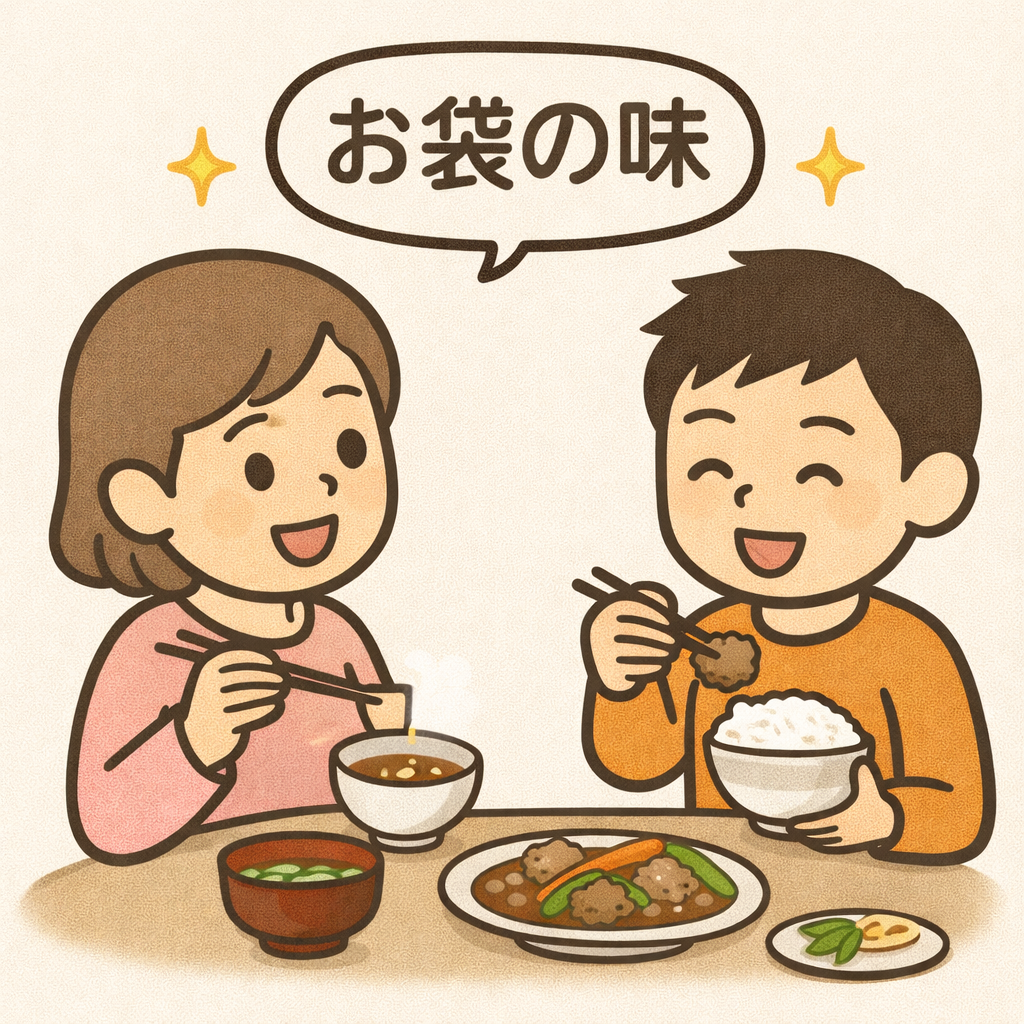
「お袋の味」は日本の家庭料理を表す情緒的な表現です。
英語での説明:
“お袋の味” (o-fukuro no aji) literally means “mother’s taste” or “mom’s cooking,” referring to the nostalgic flavor of home-cooked meals made by one’s mother.
Key meanings:
- Home-cooked food that reminds you of your mother’s cooking
- The nostalgic taste of dishes from childhood
- Simple, comforting family recipes passed down through generations
- Traditional homemade Japanese food with a personal, familiar touch
Breaking down the word:
- “お袋” (o-fukuro) = casual/affectionate term for “mother” (slightly old-fashioned)
- “味” (aji) = “taste” or “flavor”
English equivalents:
- “mom’s cooking”
- “mother’s home cooking”
- “the taste of home”
- “comfort food from home”
- “home-cooked taste”
Cultural significance: This phrase carries deep emotional meaning in Japanese culture, evoking:
- Warmth and nostalgia
- A sense of home and belonging
- Simple but lovingly prepared food
- Maternal care and love expressed through cooking
- Traditional family recipes and cooking methods
Example in context: “この味噌汁、お袋の味がする” = “This miso soup tastes like my mom’s cooking”
The term emphasizes not just the taste itself, but the emotional connection and memories associated with a mother’s home cooking.
Example sentences
「お袋の味」の例文20個を英訳付きで作成します。
1. 久しぶりに実家に帰って、お袋の味を堪能した。 I went back to my family home after a long time and savored my mother’s home cooking.
2. このレストランの料理は、まるでお袋の味のようだ。 The food at this restaurant tastes just like mom’s cooking.
3. 一人暮らしを始めてから、お袋の味が恋しくなった。 Since I started living alone, I’ve been missing my mother’s cooking.
4. お袋の味を再現しようとしたけど、なかなか同じ味にならない。 I tried to recreate my mom’s cooking, but I can’t quite get the same taste.
5. この肉じゃがは、まさにお袋の味そのものだ。 This nikujaga is exactly like my mother’s home cooking.
6. 海外に住んでいると、お袋の味が無性に食べたくなる。 Living abroad, I desperately crave my mom’s cooking.
7. 彼女の作る料理には、お袋の味のような温かみがある。 Her cooking has a warmth like mother’s home cooking.
8. お袋の味を娘に教えて、家庭の味を受け継いでいきたい。 I want to teach my daughter my cooking and pass down our family recipes.
9. 疲れた時こそ、お袋の味が心に染みる。 When I’m tired, my mother’s cooking really touches my heart.
10. お袋の味を思い出すと、子どもの頃の幸せな記憶が蘇る。 When I remember my mom’s cooking, happy childhood memories come back.
11. このレシピは、祖母から母へ、そして私へと受け継がれたお袋の味だ。 This recipe is a home-cooked taste passed down from my grandmother to my mother, and then to me.
12. 単身赴任中の夫のために、お袋の味を冷凍して送った。 I froze and sent home-cooked meals to my husband who’s on a work assignment away from home.
13. お袋の味には、高級レストランでは味わえない特別なものがある。 Mother’s home cooking has something special that you can’t taste at fancy restaurants.
14. 彼はいつも「お袋の味が一番だ」と言っている。 He always says, “Mom’s cooking is the best.”
15. お袋の味を再現するために、母に電話でレシピを聞いた。 I called my mother to ask for the recipe to recreate her cooking.
16. お袋の味を食べると、ホッとして涙が出そうになる。 When I eat my mother’s cooking, I feel so relieved that I almost cry.
17. このみそ汁の味は、まさに私が求めていたお袋の味だ。 This miso soup is exactly the taste of mom’s cooking I was looking for.
18. お袋の味を守り続けることが、私の使命だと思っている。 I feel it’s my mission to preserve my mother’s home-cooked recipes.
19. 若い頃は気づかなかったが、今ではお袋の味のありがたみがわかる。 I didn’t realize when I was young, but now I understand how precious my mother’s cooking is.
20. 母が亡くなってから、お袋の味を二度と食べられないのが寂しい。 Since my mother passed away, it’s sad that I can never eat her cooking again.
これらの例文は、「お袋の味」という言葉の持つ情緒的な意味と、家庭料理への郷愁を表現しています。
Conversation example
「お袋の味」を使った会話例を英訳付きで作成します。
会話例1:夫婦の会話
夫:今日の晩ごはん、すごく美味しかったよ。 Husband: Dinner tonight was really delicious.
妻:ありがとう。母から教わったレシピなの。 Wife: Thanks. It’s a recipe my mother taught me.
夫:これぞお袋の味って感じだね。心が温まる味だよ。 Husband: This is exactly what mom’s cooking feels like. It’s a taste that warms the heart.
妻:そう言ってもらえると嬉しい。母の味を守っていきたいから。 Wife: I’m happy to hear you say that. I want to preserve my mother’s cooking.
夫:ぜひ、子どもたちにも伝えてあげてね。 Husband: Please pass it on to our children too.
会話例2:友人同士の会話
A:一人暮らし、慣れた? A: Have you gotten used to living alone?
B:うーん、まあまあかな。でも、お袋の味が恋しくてさ。 B: Well, more or less. But I really miss my mom’s cooking.
A:わかるわかる。自炊してても、あの味は出せないんだよね。 A: I totally get it. Even when you cook for yourself, you can’t recreate that taste.
B:そうなんだよ。今週末、実家に帰ろうかと思ってる。 B: Exactly. I’m thinking of going back home this weekend.
A:いいね!お袋の味をたっぷり堪能してきなよ。 A: Nice! Go enjoy your mom’s cooking to the fullest.
B:うん、もう今から楽しみで仕方ない。 B: Yeah, I can hardly wait.
会話例3:母と息子の会話
息子:お母さん、また肉じゃが作ってくれない? Son: Mom, can you make nikujaga again?
母:また?この前も作ったでしょう。 Mother: Again? I just made it the other day.
息子:だって、お袋の味が一番美味しいんだもん。外で食べるのとは全然違う。 Son: But mom’s cooking is the best. It’s completely different from eating out.
母:そんなこと言われたら、作らないわけにはいかないわね。 Mother: When you say things like that, I have no choice but to make it.
息子:やった!ありがとう、お母さん。 Son: Yes! Thanks, Mom.
母:今度、レシピ教えるから、自分でも作れるようになりなさい。 Mother: I’ll teach you the recipe next time, so learn to make it yourself.
会話例4:職場での昼食時の会話
A:お弁当、手作り?すごいね。 A: Is that a homemade lunch? That’s impressive.
B:うん、母が作ってくれたの。実家から通ってるから。 B: Yeah, my mother made it. I commute from my family home.
A:いいなあ。お袋の味が毎日食べられるなんて羨ましい。 A: Lucky you. I’m jealous that you can eat your mom’s cooking every day.
B:確かにありがたいよね。当たり前だと思ってたけど、贅沢なことなのかも。 B: It really is something to be grateful for. I took it for granted, but maybe it’s a luxury.
A:絶対そうだよ。大事にしなよ。 A: It definitely is. Cherish it.
会話例5:レストランでの会話
客:すみません、この味噌汁、すごく懐かしい味がします。 Customer: Excuse me, this miso soup tastes very nostalgic.
店主:ありがとうございます。うちの母から受け継いだレシピなんです。 Owner: Thank you. It’s a recipe I inherited from my mother.
客:まさにお袋の味ですね。心がほっとします。 Customer: It’s exactly like mom’s cooking. It puts my heart at ease.
店主:それが一番嬉しいお言葉です。お袋の味を大切にしたお店にしたかったので。 Owner: That’s the most wonderful thing you could say. I wanted to create a restaurant that values mother’s home cooking.
客:これからも通わせてもらいますね。 Customer: I’ll keep coming back.
店主:ぜひ、またいらしてください。 Owner: Please do come again.
会話例6:祖母と孫の会話
孫:おばあちゃん、このカレー美味しい! Grandchild: Grandma, this curry is delicious!
祖母:そう?これはね、あなたのお母さんが子どもの頃から大好きだった味なのよ。 Grandmother: Really? This is a taste your mother has loved since she was a child.
孫:じゃあ、お母さんにとってのお袋の味なんだね。 Grandchild: So it’s mom’s cooking for my mother, right?
祖母:そういうことね。今度、作り方教えてあげましょうか。 Grandmother: That’s right. Shall I teach you how to make it next time?
孫:うん!覚えて、将来自分の子どもにも作ってあげたい。 Grandchild: Yes! I want to learn it and make it for my own children someday.
祖母:いい子ね。そうやって、家族の味が受け継がれていくのよ。 Grandmother: What a good child. That’s how family recipes get passed down.
会話例7:留学から帰国した学生と母親の会話
息子:ただいま、お母さん!一年ぶりだね。 Son: I’m home, Mom! It’s been a year.
母:おかえり。大きくなって…痩せたんじゃない? Mother: Welcome back. You’ve grown… haven’t you lost weight?
息子:向こうの食事が合わなくてさ。お袋の味が恋しくて恋しくて。 Son: The food there didn’t suit me. I missed mom’s cooking so much.
母:そう。じゃあ、今夜はあなたの好きなものを全部作るわ。 Mother: I see. Then tonight I’ll make all your favorite dishes.
息子:本当?嬉しい!やっぱり家が一番だよ。 Son: Really? I’m so happy! Home really is the best.
母:これからしばらくは、たっぷりお袋の味を食べさせてあげるからね。 Mother: For a while now, I’ll feed you plenty of mom’s cooking.
これらの会話例は、「お袋の味」という言葉が持つ温かみと郷愁、そして家族の絆を表現しています。様々な世代や場面での使い方を示しています。
