Contents
Meaning
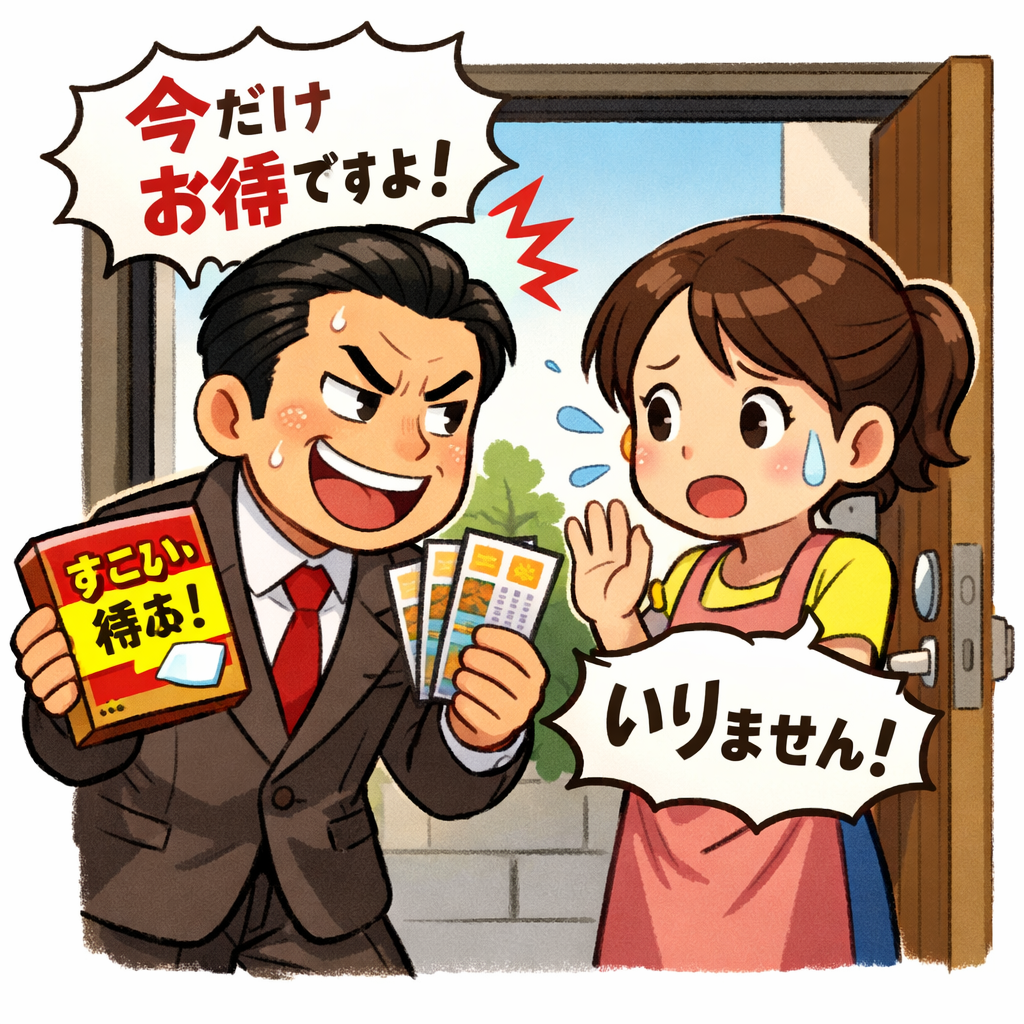
“Oshiuri” (押し売り) means aggressive selling, pushy sales tactics, or forcing someone to buy something they don’t want. It literally translates as “push-selling.”
The word breaks down as:
- “Oshi” (押し) – to push, to force
- “Uri” (売り) – selling, sale
This term describes sales practices where:
- A salesperson pressures or coerces customers into making purchases
- Someone won’t take “no” for an answer and keeps insisting
- Products or services are sold through high-pressure tactics
- The seller ignores the customer’s clear reluctance or refusal
In English, this can be expressed as:
- “Aggressive selling” or “pushy sales”
- “High-pressure sales tactics”
- “Hard sell”
- “Forced selling”
- “Door-to-door aggressive sales”
Oshiuri often has negative connotations and can include unethical practices like:
- Intimidating customers
- Using manipulative techniques
- Refusing to leave someone’s home or property
- Making people feel obligated to buy
Example: “押し売りに遭って、断りきれずに買ってしまった” (Oshiuri ni atte, kotowarikirenazu ni katte shimatta) means “I encountered a pushy salesperson and couldn’t refuse, so I ended up buying it.”
In some cases, extreme oshiuri can even be illegal, particularly if it involves fraud, threats, or harassment.
Example sentences
押し売りに関する例文20個を日本語と英語で作成します。
- 玄関先で押し売りに遭って困った。 I was troubled by an aggressive salesperson at my doorstep.
- 押し売りは迷惑なので、きっぱり断るべきだ。 Pushy sales are annoying, so you should firmly refuse.
- 押し売りの被害に遭わないように気をつけている。 I’m being careful not to become a victim of aggressive selling.
- 彼は押し売りのような営業スタイルで嫌われている。 He’s disliked for his pushy sales style.
- 押し売りに負けて、不要な商品を買ってしまった。 I gave in to the hard sell and bought an unnecessary product.
- 高齢者を狙った押し売りが問題になっている。 Aggressive selling targeting the elderly has become a problem.
- 押し売りを断ったら、相手が怒り出した。 When I refused the pushy salesperson, they got angry.
- 押し売りされそうになったので、警察に通報した。 I was about to be pressured into buying, so I called the police.
- この会社は押し売りで有名だから注意した方がいい。 This company is famous for aggressive sales tactics, so you should be careful.
- 押し売りお断りのステッカーを玄関に貼っている。 I have a “No Soliciting” sticker on my door.
- 押し売りに屈しないように、強い意志を持つことが大切だ。 It’s important to have a strong will so you don’t give in to pushy sales.
- 押し売りの手口は年々巧妙になっている。 The tactics of aggressive salespeople are becoming more sophisticated every year.
- 押し売りされて契約したが、クーリングオフ制度を使って解約した。 I was pressured into signing a contract, but I canceled it using the cooling-off system.
- 押し売りかどうか判断するのが難しい場合もある。 Sometimes it’s difficult to determine whether it’s aggressive selling or not.
- 押し売りの営業マンがしつこく訪問してくる。 A pushy salesman keeps persistently visiting.
- 押し売りに遭ったら、すぐにドアを閉めるのが賢明だ。 If you encounter aggressive selling, it’s wise to close the door immediately.
- 押し売りで高額な商品を買わされた友人がいる。 I have a friend who was forced to buy an expensive product through aggressive sales.
- 押し売りの被害を防ぐため、消費者センターに相談した。 I consulted the consumer center to prevent damage from pushy sales.
- 押し売りは法律で規制されているが、まだ存在する。 Aggressive selling is regulated by law, but it still exists.
- 押し売りに対しては、毅然とした態度で対応することが重要だ。 It’s important to respond with a firm attitude toward pushy salespeople.
Conversation example
押し売りを使った会話例を作成します。
会話例1:被害報告
A: さっき、玄関に押し売りが来て困ったよ。 A: A pushy salesperson just came to my door and it was troublesome.
B: 大丈夫だった?何か買わされた? B: Are you okay? Were you forced to buy anything?
A: いや、何とか断ったけど、すごくしつこかったんだ。 A: No, I managed to refuse, but they were really persistent.
B: それは怖かったね。次からはインターホン越しに断った方がいいよ。 B: That must have been scary. From now on, you should refuse through the intercom.
A: そうするよ。まさか押し売りに遭うとは思わなかった。 A: I will. I never thought I’d encounter aggressive selling.
会話例2:高齢の親への心配
A: お母さん、最近押し売りが多いから気をつけてね。 A: Mom, there’s been a lot of aggressive selling lately, so be careful.
B: 大丈夫よ。私は簡単に騙されないわ。 B: I’ll be fine. I’m not easily fooled.
A: でも、押し売りの手口は巧妙だから、知らない人が来たらドアを開けないでね。 A: But aggressive salespeople’s tactics are sophisticated, so don’t open the door to strangers.
B: 分かったわ。インターホンで確認するようにするわね。 B: I understand. I’ll check through the intercom.
A: もし押し売りに遭ったら、すぐに私に電話してね。 A: If you encounter pushy sales, call me right away.
B: ありがとう。心配してくれて。 B: Thank you for worrying about me.
会話例3:友人への相談
A: 実は昨日、押し売りに負けて高い掃除機を買っちゃったんだ… A: Actually, yesterday I gave in to aggressive selling and bought an expensive vacuum cleaner…
B: えっ、本当に?いくらだったの? B: What? Really? How much was it?
A: 20万円もしたんだ。今すごく後悔してる。 A: It was 200,000 yen. I really regret it now.
B: それはひどいね。でも、クーリングオフできるんじゃない? B: That’s terrible. But can’t you use the cooling-off period to cancel?
A: クーリングオフって何? A: What’s a cooling-off period?
B: 一定期間内なら契約を解除できる制度だよ。消費者センターに相談してみたら? B: It’s a system where you can cancel a contract within a certain period. Why don’t you consult the consumer center?
A: そうする!ありがとう、助かったよ。 A: I will! Thanks, you’ve been a big help.
会話例4:営業スタイルの批判
A: 新しく入った営業マン、ちょっと押し売りっぽくない? A: Don’t you think the new salesman is a bit too pushy?
B: そうだね。お客さんが嫌がってるのに、しつこく勧めてるよね。 B: Yeah. He keeps pushing even when customers are clearly reluctant.
A: あれじゃ、会社の評判が悪くなるよ。 A: That’s going to hurt the company’s reputation.
B: 誰かが注意した方がいいかもね。 B: Someone should probably warn him.
A: 上司に相談してみようか。押し売りは違法になる場合もあるし。 A: Should we talk to the boss? Aggressive selling can be illegal in some cases.
B: そうだね。早めに対処した方がいい。 B: Yeah. It’s better to deal with it early.
会話例5:対策の相談
A: この前、押し売りが来て怖かったんだけど、どう対処すればいいかな? A: A pushy salesperson came the other day and it was scary. How should I handle it?
B: まず、ドアを開けないことが一番だよ。 B: First, not opening the door is the best thing to do.
A: でも、開けちゃった後はどうすればいい? A: But what if I’ve already opened it?
B: きっぱりと「興味ありません」って言って、すぐにドアを閉めること。 B: Say firmly “I’m not interested” and close the door immediately.
A: 相手がしつこかったら? A: What if they’re persistent?
B: 警察に通報すると言えば、たいてい諦めるよ。本当にしつこければ、実際に通報していいんだよ。 B: If you say you’ll call the police, they usually give up. If they’re really persistent, you can actually call them.
会話例6:消費者センターでの相談
A: すみません、押し売りの被害について相談したいんですが。 A: Excuse me, I’d like to consult about damage from aggressive selling.
B: はい、どのような状況でしたか? B: Yes, what was the situation?
A: 訪問販売で、断っているのにしつこく勧められて、契約書にサインしてしまいました。 A: With door-to-door sales, they persistently urged me even though I was refusing, and I ended up signing the contract.
B: いつ契約されましたか? B: When did you sign the contract?
A: 3日前です。 A: Three days ago.
B: それでしたら、クーリングオフが可能です。手続きの方法を説明しますね。 B: In that case, you can use the cooling-off period. Let me explain the procedure.
会話例7:近所の情報交換
A: 最近、この辺りで押し売りが増えてるって聞いたけど、本当? A: I heard aggressive selling has increased around here lately. Is it true?
B: うん、実は昨日うちにも来たよ。 B: Yeah, actually they came to my house yesterday.
A: どんな感じだった? A: What was it like?
B: 健康食品の押し売りで、なかなか帰ってくれなくて困ったよ。 B: It was aggressive selling of health foods, and they wouldn’t leave, which was troubling.
A: それは大変だったね。みんなで気をつけないとね。 A: That must have been difficult. We all need to be careful.
B: そうだね。町内会で注意喚起した方がいいかもね。 B: Yeah. Maybe we should issue a warning through the neighborhood association.
会話例8:会社での研修
A: 今日の研修、押し売りと適切な営業の違いについてだったね。 A: Today’s training was about the difference between aggressive selling and proper sales, wasn’t it?
B: うん、すごく勉強になった。お客さんの気持ちを尊重することが大切だね。 B: Yeah, it was very educational. It’s important to respect the customer’s feelings.
A: そうだね。押し売りは短期的には売上につながっても、長期的には会社の信用を失うからね。 A: Right. Aggressive selling might lead to sales in the short term, but in the long term it loses the company’s credibility.
B: お客さんが本当に必要としているものを提案するのが、本当の営業だよね。 B: Proposing what customers truly need is what real sales is about.
A: その通り。押し売りにならないように、常に意識していこう。 A: Exactly. Let’s always be conscious not to become pushy salespeople.
