Contents
Meaning
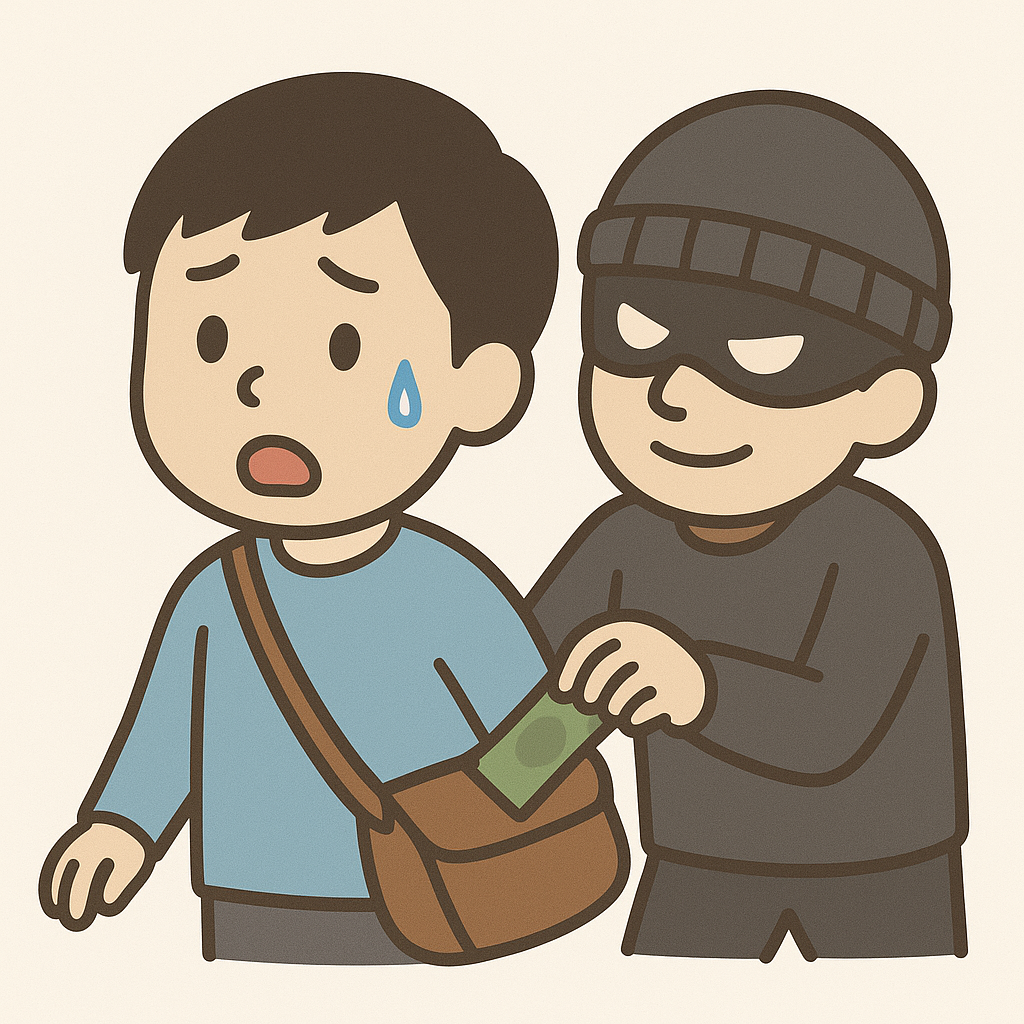
“置き引き” (okibiki) means theft of unattended belongings or luggage theft. It specifically refers to stealing items that someone has temporarily left somewhere.
The word combines “oki” (placing/leaving) and “hiki” (pulling/taking away), literally meaning “taking what was left/placed down.”
This type of theft typically occurs when someone:
- Leaves their bag on a chair while going to the restroom in a café
- Places their luggage down at a train station or airport
- Leaves belongings unattended in public spaces like libraries or restaurants
- Steps away from their items even briefly
For example, if you leave your laptop on a table at Starbucks to go order, and someone steals it while you’re away, that’s 置き引き.
Cultural context: In Japan, 置き引き is taken very seriously as a crime, and there are frequent warnings in public places (especially tourist areas, train stations, and airports) reminding people to watch their belongings. Signs often say “置き引きにご注意ください” (okibiki ni go-chuui kudasai – “Please beware of bag snatchers/theft of unattended items”).
It’s different from:
- スリ (suri) – pickpocketing (taking from someone’s pocket/bag while they’re carrying it)
- 強盗 (gōtō) – robbery (using force or threats)
Example sentences
Here are 20 example sentences using 置き引き with English translations:
- カフェで置き引きに遭ってしまった。 I had my belongings stolen at a café.
- トイレに行く間に置き引きされた。 My things were stolen while I went to the bathroom.
- 空港では置き引きに注意してください。 Please be careful of luggage theft at the airport.
- 置き引き犯が防犯カメラに映っていた。 The thief was caught on security camera.
- 置き引きを防ぐために、荷物から目を離さないようにしよう。 To prevent theft, let’s not take our eyes off our belongings.
- 図書館で置き引きが多発している。 There have been many cases of theft at the library.
- 彼は置き引きの被害に遭って、パスポートを盗まれた。 He was a victim of theft and had his passport stolen.
- 置き引きされないように、貴重品は持ち歩いてください。 Please carry your valuables with you to avoid having them stolen.
- 駅のホームで置き引きに注意を呼びかけるアナウンスが流れた。 An announcement warning about theft was broadcast on the station platform.
- 観光地では置き引きが頻繁に起こる。 Theft of unattended items frequently occurs at tourist spots.
- 置き引き防止のため、荷物にチェーンをつけている。 I attach a chain to my luggage to prevent theft.
- 友人が置き引きに遭って、財布を失くした。 My friend was a victim of theft and lost their wallet.
- 置き引きの手口は年々巧妙になっている。 Methods of bag snatching are becoming more sophisticated year by year.
- この地域は置き引きが少なくて安全だ。 This area is safe with few cases of theft.
- 置き引き犯は一瞬の隙を狙っている。 Thieves target moments of inattention.
- ホテルのロビーでも置き引きに気をつけるべきだ。 You should be careful of theft even in hotel lobbies.
- 置き引きされたバッグが後で見つかった。 The stolen bag was found later.
- 置き引き被害を警察に届け出た。 I reported the theft to the police.
- レストランで席を確保するために荷物を置くのは置き引きの危険がある。 Leaving your belongings to reserve a seat at a restaurant risks theft.
- 置き引きに遭わないよう、常に警戒心を持つことが大切だ。 It’s important to always stay vigilant to avoid being a victim of theft.
Conversation example
Here are conversation examples using 置き引き with English translations:
会話例1: カフェで友達と (At a café with a friend)
A: ちょっとトイレ行ってくるね。荷物見ててくれる?
A: I’m going to the restroom for a bit. Can you watch my stuff?
B: もちろん。この辺、置き引き多いって聞くからね。
B: Of course. I’ve heard there are a lot of bag snatchings around here.
A: ありがとう。すぐ戻るから。
A: Thanks. I’ll be right back.
会話例2: 被害に遭った後 (After being a victim)
A: 大変!私のバッグがない!
A: Oh no! My bag is gone!
B: え、本当?置き引きに遭ったんじゃない?
B: What, really? You must have been robbed!
A: さっきまでここに置いてたのに…警察に連絡しなきゃ。
A: It was right here just a moment ago… I need to call the police.
B: すぐに駅員さんにも知らせよう。防犯カメラがあるかもしれない。
B: Let’s also notify the station staff right away. There might be security cameras.
会話例3: 旅行前の注意 (Warning before a trip)
母: 海外旅行に行くなら、置き引きに気をつけてね。
Mother: If you’re going abroad, be careful of theft.
娘: 分かってる。荷物から目を離さないようにするよ。
Daughter: I know. I won’t take my eyes off my belongings.
母: 特に空港とか人混みでは要注意よ。
Mother: Be especially careful at airports and in crowded places.
会話例4: 駅で (At the station)
駅員: お客様、そこに荷物を置いたままにしないでください。
Station staff: Excuse me, please don’t leave your luggage there unattended.
客: あ、すみません。切符を買うだけだったんですが。
Passenger: Oh, sorry. I was just buying a ticket.
駅員: 最近この駅で置き引きが増えているんです。十分ご注意ください。
Station staff: There have been increasing thefts at this station recently. Please be very careful.
会話例5: 目撃した場合 (When witnessing a theft)
A: ねえ、あの人、さっきあそこに置いてあったバッグ持って行ったよ。
A: Hey, that person just took the bag that was left over there.
B: え、置き引き?店員さんに言わなきゃ!
B: What, theft? We have to tell the staff!
A: すみません!今、置き引きがあったと思います!
A: Excuse me! I think there was just a theft!
会話例6: 対策について (Discussing prevention measures)
A: この図書館、置き引きが多いらしいね。
A: I heard there are a lot of thefts at this library.
B: うん、だから私はいつも貴重品をロッカーに入れてる。
B: Yeah, that’s why I always put my valuables in a locker.
A: いい考えだね。私も今度からそうしよう。
A: That’s a good idea. I’ll do that from now on too.
会話例7: 警察に通報 (Reporting to the police)
警察: どのような被害に遭われましたか。
Police: What kind of incident occurred?
被害者: カフェで置き引きに遭いました。ノートパソコンが入ったバッグを盗まれました。
Victim: I had my belongings stolen at a café. My bag with my laptop was taken.
警察: いつ頃気づかれましたか。
Police: When did you notice?
被害者: 5分ほど席を離れて、戻ってきたら無くなっていました。
Victim: I left my seat for about 5 minutes, and when I came back it was gone.
会話例8: ホテルで (At a hotel)
フロント: お荷物は客室にお持ちください。ロビーに置いたままですと置き引きの危険があります。
Front desk: Please take your luggage to your room. If you leave it in the lobby, there’s a risk of theft.
客: 分かりました。チェックインの間だけだったんですが。
Guest: Understood. It was just for the duration of check-in.
フロント: 念のためお預かりすることもできますよ。
Front desk: Just to be safe, we can also store it for you.
会話例9: 友人への忠告 (Advising a friend)
A: スマホ、そこに置きっぱなしにしてて大丈夫?
A: Is it okay to leave your phone sitting there?
B: え、ちょっと注文するだけだし。
B: Huh? I’m just placing an order.
A: でも置き引きされたらどうするの?持って行こうよ。
A: But what if it gets stolen? Let’s take it with us.
B: そうだね。用心するに越したことないか。
B: You’re right. Better safe than sorry.
会話例10: 体験談を話す (Sharing an experience)
A: 前に置き引きに遭ったことある?
A: Have you ever been a victim of theft before?
B: うん、一度だけ。空港で荷物から目を離した隙にやられた。
B: Yeah, just once. I was targeted at the airport when I looked away from my luggage for a moment.
A: 何を盗まれたの?
A: What was stolen?
B: カメラとか大事なものが入ったバッグ。それ以来、絶対に荷物から離れないようにしてる。
B: A bag with my camera and important items. Since then, I never leave my belongings unattended.
