Contents
Meaning
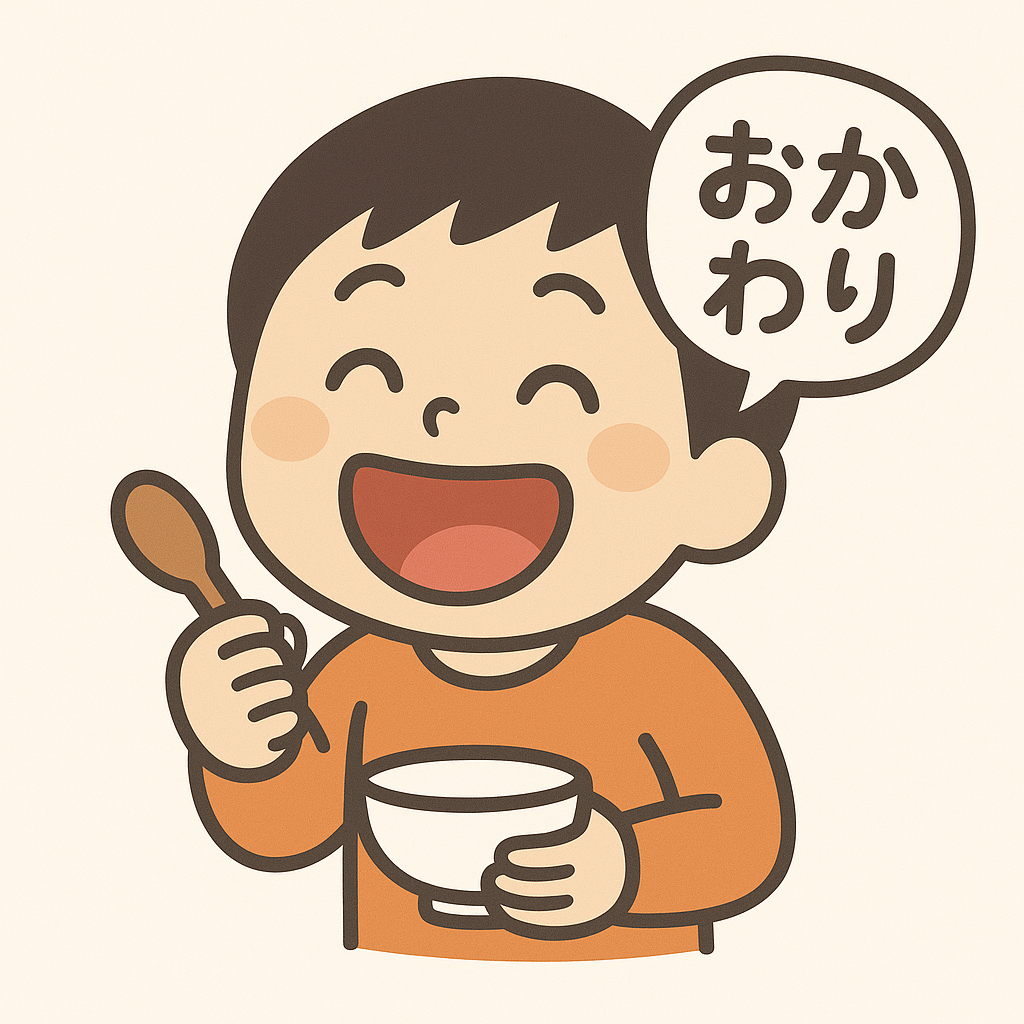
“おかわり” (okawari) means to ask for or receive a second serving or refill of food or drink.
The word literally combines “o-” (a polite prefix) with “kawari” (replacement/change). When you’ve finished your first portion and want more, you say “おかわり” or “おかわりください” (okawari kudasai – “May I have another serving, please?”).
This is commonly used in casual settings like:
- At home during meals
- In restaurants that offer free refills of rice or tea
- When drinking with friends and wanting another round
For example, if you finish your bowl of rice at dinner, you might say “ごはん、おかわり!” (gohan, okawari! – “More rice, please!”).
The cultural context is that Japanese dining often involves sharing multiple dishes, and it’s perfectly normal and polite to ask for seconds, especially of staples like rice or tea.
Example sentences
Here are 20 example sentences using おかわりする with English translations:
- ご飯をおかわりしてもいいですか。 May I have another serving of rice?
- このカレーが美味しくて、思わずおかわりしちゃった。 This curry was so delicious that I ended up getting seconds without thinking.
- お茶をおかわりしましょうか。 Shall I refill your tea?
- 子供たちが何度もおかわりするほど人気のメニューです。 It’s such a popular dish that the children ask for seconds many times.
- 遠慮しないでおかわりしてくださいね。 Please don’t hesitate to have seconds.
- 彼はいつも三回おかわりする。 He always gets three servings.
- おかわり自由のお店を見つけた。 I found a restaurant with free refills.
- コーヒーのおかわりはいかがですか。 Would you like a refill of coffee?
- お腹いっぱいだからおかわりしない。 I’m full, so I won’t have seconds.
- 味噌汁だけおかわりしたいです。 I’d like just a refill of miso soup.
- おかわりするほどお腹が空いていなかった。 I wasn’t hungry enough to get seconds.
- 彼女は恥ずかしそうにおかわりを頼んだ。 She shyly asked for another serving.
- ラーメン屋で麺をおかわりできる。 You can get extra noodles at this ramen shop.
- おかわりしすぎて後悔している。 I regret having too many servings.
- このレストランではご飯のおかわりが無料だ。 At this restaurant, rice refills are free.
- お代わりする前に少し休憩しよう。 Let’s take a short break before getting seconds.
- ビールをおかわりしましょう。 Let’s have another round of beer.
- 母の料理は美味しくて、いつもおかわりしてしまう。 My mother’s cooking is so good that I always end up having seconds.
- おかわりは一回までです。 You can only have one refill.
- 遠慮なくおかわりしてね、たくさん作ったから。 Feel free to have seconds—I made plenty.
Conversation example
Here are conversation examples using おかわりする with English translations:
会話例1: 家族の食卓で (At the family dinner table)
母: ご飯、おかわりする?
Mother: Would you like more rice?
息子: うん、おかわりする!このハンバーグ、めっちゃ美味しい。
Son: Yeah, I’ll have more! This hamburger steak is really delicious.
母: たくさん食べてね。おかわり自由だから。
Mother: Eat as much as you want. Seconds are unlimited.
会話例2: レストランで (At a restaurant)
客: すみません、ご飯のおかわりできますか。
Customer: Excuse me, can I get a refill of rice?
店員: はい、もちろんです。少々お待ちください。
Server: Yes, of course. Just a moment, please.
客: ありがとうございます。ここの料理、本当に美味しいですね。
Customer: Thank you. The food here is really delicious.
会話例3: 友達同士で (Between friends)
A: お茶、おかわりする?
A: Want a refill of tea?
B: ううん、大丈夫。もうお腹いっぱい。
B: No, I’m okay. I’m already full.
A: 私はもう一杯おかわりしようかな。
A: I think I’ll have one more cup.
会話例4: 居酒屋で (At an izakaya/Japanese pub)
A: ビール、おかわりしようよ。
A: Let’s get another round of beer.
B: いいね!じゃあ、店員さん呼ぼう。
B: Sounds good! Let’s call the server.
A: すみません、生ビール二つおかわりで!
A: Excuse me, two more draft beers, please!
会話例5: 遠慮する場面 (Declining politely)
ホスト: おかわりどうぞ。遠慮しないで。
Host: Please have seconds. Don’t hold back.
ゲスト: ありがとうございます。でも、もう十分いただきました。
Guest: Thank you, but I’ve already had plenty.
ホスト: そう?じゃあ、デザートは食べられる?
Host: Really? Well then, do you have room for dessert?
会話例6: 子供と親 (Parent and child)
子供: ママ、カレーおかわりしたい!
Child: Mom, I want more curry!
母: まあ、全部食べたの?えらいわね。
Mother: Oh my, you finished it all? Good job!
子供: うん!今日のカレー、いつもより美味しいよ。
Child: Yeah! Today’s curry is even better than usual.
会話例7: 定食屋で (At a set meal restaurant)
客: ここ、ご飯おかわり無料なんですか。
Customer: Is rice refill free here?
店員: はい、おかわり自由です。お味噌汁もおかわりできますよ。
Server: Yes, unlimited refills. You can also get refills of miso soup.
客: それは嬉しいですね。じゃあ、おかわりお願いします。
Customer: That’s great. Then I’ll have a refill, please.
会話例8: 食べ過ぎを心配する (Worrying about overeating)
A: また、おかわりするの?食べ過ぎじゃない?
A: You’re getting seconds again? Aren’t you eating too much?
B: 大丈夫、大丈夫。今日はたくさん運動したから。
B: It’s fine, it’s fine. I exercised a lot today.
A: そう言って、いつも後で後悔するでしょ。
A: You always say that and regret it later, don’t you?
