Contents
Meaning
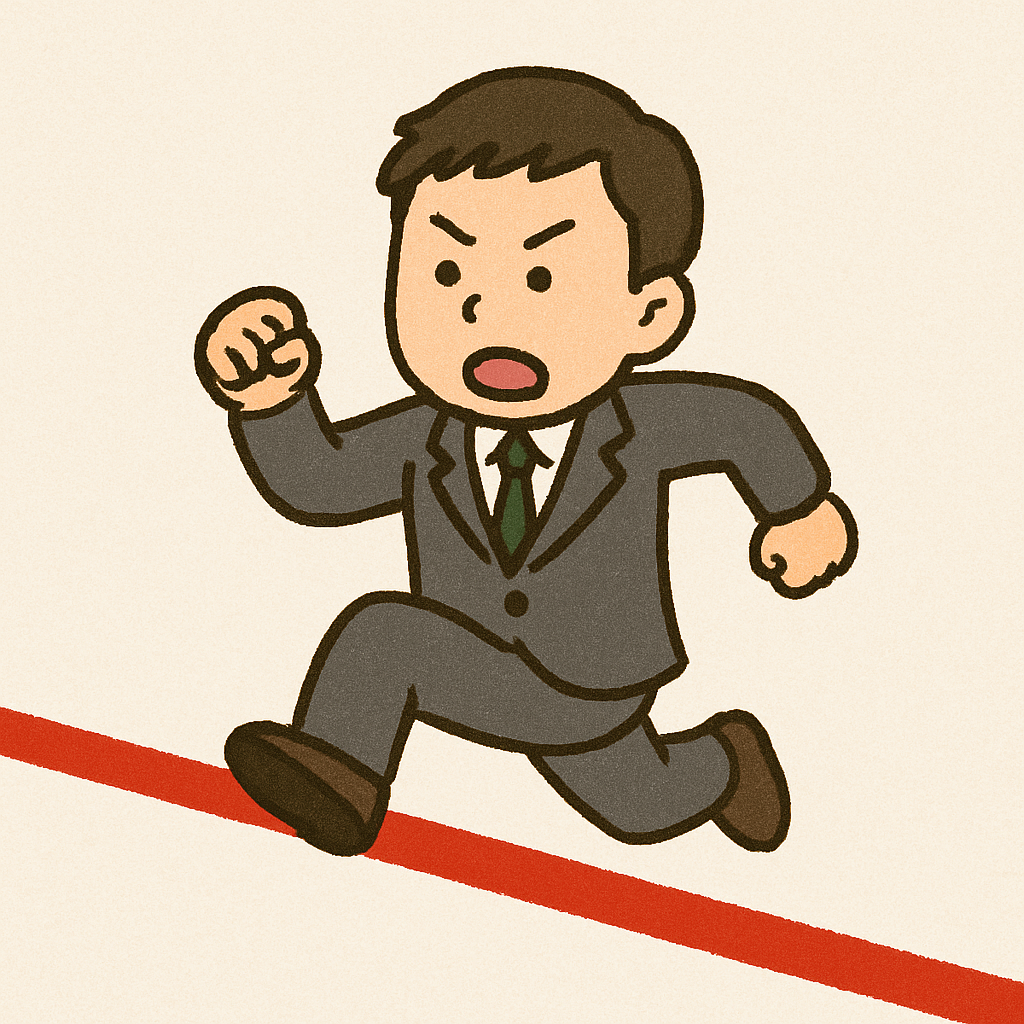
「一線を越える」is a Japanese idiom that literally means “to cross a line.” It refers to going beyond an acceptable boundary or limit, stepping over a threshold that should not be crossed.
This expression describes the act of:
- Transgressing moral, ethical, or social boundaries
- Moving from an acceptable state to an unacceptable one
- Taking an irreversible step into forbidden territory
- Violating rules, norms, or established limits
In English, this can be translated as:
- “to cross the line”
- “to go too far”
- “to overstep the bounds”
- “to cross a boundary”
- “to step over the line”
- “to go beyond acceptable limits”
Common usage contexts:
- Romantic/sexual context: Often used euphemistically to refer to taking a relationship to a physical/intimate level, particularly when it’s inappropriate (e.g., an affair, relationship between people who shouldn’t be involved)
- Ethical violations: Breaking moral or professional codes of conduct
- Legal boundaries: Committing a crime or illegal act
- Social norms: Behaving in ways that violate social expectations or propriety
- Professional conduct: Crossing boundaries in workplace relationships or business dealings
Key characteristics:
- Implies a clear demarcation between acceptable and unacceptable
- Often suggests the action cannot be easily undone
- Carries a sense of wrongdoing or inappropriateness
- The “line” is usually understood contextually, not explicitly stated
Example of usage: If a teacher and student begin a romantic relationship, people might say they’ve “一線を越えた” (crossed the line) because they’ve violated the professional boundary that should exist between them.
Example sentences
一線を越えるの例文を20個、英訳付きで作成しますね。
- 彼らはついに一線を越えて、不倫関係になってしまった。 They finally crossed the line and entered into an affair.
- 上司と部下という関係で一線を越えるべきではない。 You shouldn’t cross the line in a boss-subordinate relationship.
- 彼は怒りのあまり、一線を越えて暴力を振るってしまった。 In his anger, he went too far and resorted to violence.
- 冗談のつもりだったが、一線を越えた発言をしてしまった。 I meant it as a joke, but I made a comment that crossed the line.
- 二人はただの友達だったが、ある夜一線を越えた。 They were just friends, but one night they crossed the line.
- ビジネスの競争は激しいが、一線を越えた手段は使うべきではない。 Business competition is fierce, but you shouldn’t use methods that cross the line.
- 彼女は一線を越えずに、適切な距離を保っている。 She maintains an appropriate distance without crossing the line.
- 政治家として一線を越える発言をして、批判を浴びた。 As a politician, he made remarks that crossed the line and was criticized.
- 一線を越えたら、もう後戻りはできない。 Once you cross the line, there’s no going back.
- 記者は取材のために一線を越えてプライバシーを侵害した。 The reporter crossed the line and invaded privacy in pursuit of a story.
- 教師と生徒が一線を越える関係は許されない。 A relationship where a teacher and student cross the line is unacceptable.
- 彼は酔った勢いで一線を越えた行動をして後悔している。 He regrets his actions that crossed the line when he was drunk.
- 友情と恋愛の一線を越えるのは難しい決断だ。 Crossing the line from friendship to romance is a difficult decision.
- 一線を越えない範囲で、自由に意見を述べてください。 Please express your opinions freely within limits that don’t cross the line.
- 彼のジョークは時々一線を越えて、人を不快にさせる。 His jokes sometimes cross the line and make people uncomfortable.
- 医師として一線を越えた治療を行い、免許を剥奪された。 He performed treatment that crossed the line as a doctor and had his license revoked.
- 一線を越えそうになったが、理性で踏みとどまった。 I was about to cross the line, but my reason held me back.
- 彼女との関係で一線を越えるつもりはない。 I have no intention of crossing the line in my relationship with her.
- SNSでの発言が一線を越えて、炎上騒ぎになった。 His comments on social media crossed the line and caused an uproar.
- 一線を越えた瞬間、全てが変わってしまった。 The moment we crossed the line, everything changed.
これらの例文は、「一線を越える」が使われる様々な文脈を示しています。恋愛関係、倫理的な境界、社会的規範、法的な限界など、多様な場面でこの表現が用いられます。
Conversation example
一線を越えるを使った会話例を英訳付きで作成しますね。
会話例1:友人への恋愛相談
美香: 実は、職場の上司のことが好きになっちゃって… Mika: Actually, I’ve fallen for my boss at work…
由美: え、それってまずいんじゃない? Yumi: Eh, isn’t that a problem?
美香: 分かってる。でも、彼も私のこと気になってるみたいで。 Mika: I know. But he seems to be interested in me too.
由美: 一線を越えたら、仕事に支障が出るよ。よく考えた方がいい。 Yumi: If you cross the line, it’ll affect your work. You should think carefully about it.
美香: そうだよね。一線を越えるべきじゃないって、頭では分かってるんだけど… Mika: You’re right. I know in my head that I shouldn’t cross the line, but…
会話例2:夫婦の会話
妻: あなた、最近帰りが遅いわね。 Wife: You’ve been coming home late recently.
夫: 仕事が忙しいんだよ。 Husband: Work has been busy.
妻: 会社の女性と飲みに行ってるって聞いたけど。 Wife: I heard you’ve been going out drinking with a woman from your company.
夫: ただの同僚だよ。一線を越えるようなことは絶対にしてない。 Husband: She’s just a colleague. I absolutely haven’t crossed any lines.
妻: 信じていいのね?一線を越えたら、許さないから。 Wife: I can trust you, right? If you cross the line, I won’t forgive you.
会話例3:ビジネスの倫理について
部長: 田中君、このやり方は一線を越えてないか? Department Manager: Tanaka, doesn’t this approach cross the line?
田中: でも、競合他社もやっていることですし… Tanaka: But our competitors are doing it too…
部長: 他社がやってるからといって、我々も一線を越えていいわけじゃない。 Department Manager: Just because other companies are doing it doesn’t mean we should cross the line too.
田中: 申し訳ございません。別の方法を考えます。 Tanaka: I apologize. I’ll think of another approach.
部長: ビジネスには守るべきルールがある。一線を越えないように気をつけろ。 Department Manager: There are rules in business that must be followed. Be careful not to cross the line.
会話例4:友人同士の境界線
太郎: 昨日、酔っ払って変なこと言ってなかった? Taro: Did I say anything weird yesterday when I was drunk?
花子: ちょっと一線を越えた発言があったかな。 Hanako: There were some comments that crossed the line.
太郎: マジで?ごめん、何て言った? Taro: Seriously? Sorry, what did I say?
花子: 私の恋愛のこと、みんなの前でベラベラ話してたよ。 Hanako: You were blabbing about my love life in front of everyone.
太郎: うわ、最悪だ。本当にごめん。一線を越えた発言だったね。 Taro: Ugh, that’s terrible. I’m really sorry. That was a comment that crossed the line.
会話例5:親子の会話
息子: 彼女と旅行に行ってもいい? Son: Can I go on a trip with my girlfriend?
母: あなたたち、まだ高校生でしょ? Mother: You’re still in high school, aren’t you?
息子: 分かってるよ。一線を越えるようなことはしないから。 Son: I know. We won’t cross any lines.
母: 本当に?お母さん心配なのよ。 Mother: Really? I’m worried.
息子: 信じてよ。ちゃんと節度を持って行動するから。 Son: Trust me. We’ll behave appropriately.
会話例6:SNSでの炎上について
A: 見た?あの芸能人のツイート、炎上してるよ。 A: Did you see? That celebrity’s tweet is causing an uproar.
B: ああ、完全に一線を越えた内容だったね。 B: Yeah, the content completely crossed the line.
A: 何であんなこと投稿したんだろう。 A: Why would they post something like that?
B: 冗談のつもりだったんだろうけど、一線を越えてるって分からなかったのかな。 B: They probably meant it as a joke, but I wonder if they didn’t realize they were crossing the line.
A: これ、謝罪しても許してもらえないレベルだよ。 A: This is at a level where even an apology won’t be forgiven.
会話例7:教師と生徒の関係
教師A: 山本先生と生徒の佐藤さん、最近妙に親しいよね。 Teacher A: Teacher Yamamoto and student Sato seem oddly close lately.
教師B: 気になってたんだ。まさか一線を越えてないよね? Teacher B: I’ve been concerned about that. They haven’t crossed the line, have they?
教師A: それはないと思うけど、注意した方がいいかも。 Teacher A: I don’t think so, but maybe we should warn him.
教師B: そうだね。教師と生徒が一線を越えたら大問題だから。 Teacher B: Right. If a teacher and student cross the line, it would be a huge problem.
会話例8:恋愛の進展について
健太: 昨日、彼女と初めて二人きりで旅行に行ったんだ。 Kenta: Yesterday, I went on a trip alone with my girlfriend for the first time.
友人: おお、ついに一線を越えたのか? Friend: Oh, so you finally crossed the line?
健太: いや、まだだよ。お互い、まだそのタイミングじゃないって。 Kenta: No, not yet. We both feel it’s not the right time yet.
友人: そうか。焦る必要はないもんな。 Friend: I see. There’s no need to rush.
健太: うん。一線を越えるのは、お互いが準備できた時でいいと思ってる。 Kenta: Yeah. I think we should cross that line when we’re both ready.
会話例9:記者の取材姿勢
編集長: この記事、ちょっと一線を越えてないか? Editor-in-Chief: Doesn’t this article cross the line a bit?
記者: でも、事実ですし、読者も知りたい情報だと思います。 Reporter: But it’s the truth, and I think readers want to know this information.
編集長: 事実でも、プライバシーの侵害になる。一線を越えた取材はするな。 Editor-in-Chief: Even if it’s true, it’s an invasion of privacy. Don’t conduct reporting that crosses the line.
記者: 分かりました。書き直します。 Reporter: Understood. I’ll rewrite it.
会話例10:友情と恋愛の境界
真由美: ねえ、私たちって友達以上の関係になれると思う? Mayumi: Hey, do you think we could become more than friends?
裕介: 正直、迷ってる。一線を越えたら、今の関係が壊れるかもしれない。 Yusuke: Honestly, I’m hesitant. If we cross the line, our current relationship might be ruined.
真由美: でも、このままでいいの? Mayumi: But are you okay with things as they are?
裕介: 分からない。一線を越えるって、すごく勇気がいることだから。 Yusuke: I don’t know. Crossing that line takes a lot of courage.
真由美: そうだね。じっくり考えよう。 Mayumi: You’re right. Let’s think about it carefully.
これらの会話例は、「一線を越える」が使われる様々な状況を示しています。恋愛関係、職業倫理、社会的規範など、多様な文脈でこの表現が用いられ、しばしば重要な決断や倫理的判断を伴う場面で使われます。
