Contents
Meaning
“お子様ランチ” (okosama-ranchi) literally means “children’s lunch” and refers to a special meal set designed specifically for children at restaurants in Japan.
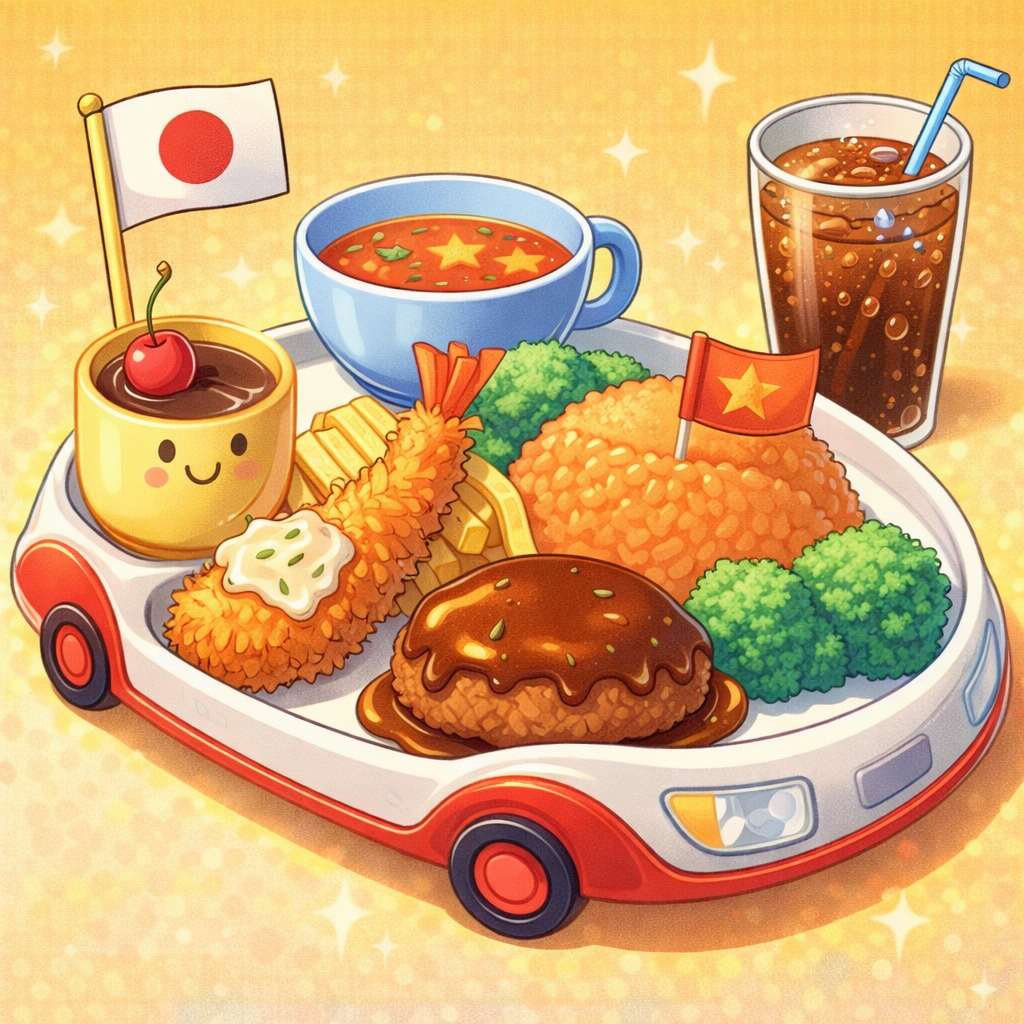
What it is: お子様ランチ is a colorful, appealing meal typically served on a single plate or tray, featuring a variety of foods that children enjoy. It’s designed to be visually attractive and fun, often incorporating elements that appeal to kids.
Typical components include:
- Rice shaped into a mound, often with a small flag on top
- Fried items like fried shrimp (ebi furai), chicken nuggets, or hamburg steak
- Spaghetti or pasta (usually with ketchup)
- French fries or potato
- Vegetables (like corn, broccoli, or cherry tomatoes)
- Dessert items (pudding, jelly, or fruit)
- Sometimes includes a small toy or prize
Key characteristics:
- Served in portions appropriate for children
- Presented in a colorful, attractive way to appeal to kids
- Often comes with a small gift or toy
- Usually only available to children (some restaurants have age restrictions)
- Relatively inexpensive compared to adult meals
- The flag on top of the rice mound is an iconic symbol
Cultural significance: お子様ランチ has been a beloved staple of Japanese family dining since the 1930s and represents a special treat for children when eating out. It’s become so iconic that even adults sometimes feel nostalgic for it.
English equivalents: While there’s no exact equivalent in English-speaking countries, similar concepts include:
- “Kids’ meal”
- “Children’s plate”
- “Happy Meal” (at fast food restaurants, though this is quite different)
However, none of these quite capture the unique presentation style and cultural significance of お子様ランチ in Japan.
Example sentences
Here are 20 example sentences using お子様ランチ with English translations:
- レストランでお子様ランチを注文したら、小さな旗が立っていて嬉しかった。 When I ordered a children’s meal at the restaurant, I was happy to see a little flag on top.
- お子様ランチには、ハンバーグ、エビフライ、スパゲティが入っている。 The kids’ meal includes a hamburger steak, fried shrimp, and spaghetti.
- 娘の誕生日に、特別なお子様ランチを注文してあげた。 I ordered a special children’s meal for my daughter’s birthday.
- お子様ランチに付いてくるおもちゃを楽しみにしている。 I’m looking forward to the toy that comes with the kids’ meal.
- このレストランのお子様ランチは、12歳以下限定だ。 The children’s meal at this restaurant is only available for kids 12 and under.
- 大人になってもお子様ランチを食べたいと思うことがある。 Even as an adult, I sometimes wish I could eat a children’s meal.
- お子様ランチの旗が立ったライスは、子供の頃の憧れだった。 The rice with a flag on top in the children’s meal was my childhood dream.
- お子様ランチは見た目がカラフルで、子供たちに大人気だ。 Kids’ meals are colorful and very popular with children.
- 息子はお子様ランチのデザートが一番楽しみらしい。 My son seems most excited about the dessert in the children’s meal.
- ファミリーレストランでお子様ランチを3つ注文した。 I ordered three children’s meals at the family restaurant.
- お子様ランチは栄養バランスも考えて作られている。 Children’s meals are made with nutritional balance in mind.
- 昔のお子様ランチはもっとシンプルだったらしい。 Apparently, children’s meals in the old days were much simpler.
- お子様ランチの量は、子供にちょうどいいサイズだ。 The portion size of a children’s meal is just right for kids.
- お子様ランチを卒業するのが寂しかった。 I was sad when I grew too old for children’s meals.
- このカフェのお子様ランチは、アレルギー対応もしている。 This café’s children’s meal also accommodates allergies.
- お子様ランチには必ずケチャップスパゲティが入っている。 Children’s meals always include spaghetti with ketchup.
- 子供たちはお子様ランチの旗を集めるのが好きだ。 Children love collecting the flags from kids’ meals.
- 大人用のお子様ランチを提供するレストランもある。 Some restaurants offer adult-sized versions of children’s meals.
- お子様ランチを食べると、子供の頃を思い出す。 Eating a children’s meal reminds me of my childhood.
- お子様ランチのプレートは、いつも色とりどりで楽しい。 The children’s meal plate is always colorful and fun.
Conversation example
Here are several conversation examples using お子様ランチ with English translations:
会話例1:レストランにて (At a restaurant)
ウェイター: ご注文はお決まりですか? Waiter: Are you ready to order?
母: お子様ランチを2つお願いします。 Mother: Two children’s meals, please.
子供: お子様ランチに旗は付いてる? Child: Does the kids’ meal come with a flag?
ウェイター: はい、もちろんです。おもちゃも付いていますよ。 Waiter: Yes, of course. It also comes with a toy.
会話例2:家族での外食 (Family dining out)
父: 何を食べたい? Father: What would you like to eat?
子供: お子様ランチ!エビフライが食べたい! Child: A kids’ meal! I want fried shrimp!
母: でも、この前もお子様ランチだったでしょ? Mother: But you had a kids’ meal last time too, didn’t you?
子供: だって、おもちゃが欲しいんだもん。 Child: But I want the toy!
会話例3:友人同士の思い出話 (Friends reminiscing)
A: 子供の頃、お子様ランチが大好きだったよね。 A: We loved kids’ meals when we were children, didn’t we?
B: うん!旗が立ってるライスが特別な感じがして。 B: Yeah! The rice with the flag on top felt so special.
A: 今でも食べられるなら食べたいよ。 A: I’d still eat one now if I could.
B: 大人用のお子様ランチがあるレストラン、あるらしいよ。 B: I heard there are restaurants that offer adult-sized kids’ meals.
会話例4:レストランでの注文 (Ordering at a restaurant)
店員: お子様ランチは12歳以下のお客様限定となっております。 Staff: The children’s meal is limited to customers 12 years old and under.
母: この子は10歳なので大丈夫です。 Mother: This child is 10, so that’s fine.
子供: お子様ランチのおもちゃは選べるの? Child: Can I choose the toy with the kids’ meal?
店員: 申し訳ございません。おもちゃはランダムになります。 Staff: I’m sorry. The toys are given randomly.
会話例5:兄弟の会話 (Between siblings)
兄: もう中学生だから、お子様ランチは頼めないな。 Older brother: I’m in middle school now, so I can’t order a kids’ meal anymore.
弟: 僕はまだ小学生だから頼めるよ! Younger brother: I’m still in elementary school, so I can order one!
兄: いいなあ。お子様ランチ、もう一度食べたいよ。 Older brother: Lucky you. I want to eat a kids’ meal one more time.
弟: お兄ちゃんの分、少しあげようか? Younger brother: Want me to share some with you?
会話例6:夫婦の会話 (Married couple)
夫: 子供たち、何を食べるかな? Husband: What will the kids eat?
妻: お子様ランチに決まってるでしょ。いつもそうじゃない。 Wife: They’ll have kids’ meals, of course. They always do.
夫: お子様ランチばかりで飽きないのかな? Husband: Don’t they get tired of always having kids’ meals?
妻: 子供はお子様ランチが特別なのよ。私たちもそうだったでしょ? Wife: Kids’ meals are special to children. We were the same way, weren’t we?
会話例7:祖父母と孫 (Grandparents and grandchild)
祖母: 今日は何が食べたい? Grandmother: What would you like to eat today?
孫: お子様ランチ! Grandchild: A kids’ meal!
祖父: お子様ランチか。昔はこんなに豪華じゃなかったな。 Grandfather: A kids’ meal, huh. They weren’t this fancy in the old days.
祖母: でも、孫が喜んでくれるならそれが一番ね。 Grandmother: But if it makes our grandchild happy, that’s what matters most.
会話例8:レストランスタッフの会話 (Restaurant staff conversation)
店長: 今日のお子様ランチの在庫は足りてる? Manager: Do we have enough kids’ meals in stock today?
スタッフ: はい。おもちゃも十分にあります。 Staff: Yes. We also have plenty of toys.
店長: 週末は家族連れが多いから、お子様ランチの準備をしっかりね。 Manager: We get a lot of families on weekends, so make sure the kids’ meals are well-prepared.
スタッフ: 承知しました。旗も補充しておきます。 Staff: Understood. I’ll restock the flags too.
会話例9:SNSでの投稿 (Social media post)
投稿: 久しぶりにお子様ランチ食べられるレストラン見つけた! Post: Found a restaurant where I can eat a kids’ meal after so long!
コメント1: 大人もOKなの? Comment 1: Adults can order it too?
投稿者: うん!大人用お子様ランチっていうメニューがあるの! Poster: Yeah! They have a menu item called “adult-sized kids’ meal”!
コメント2: いいなあ。懐かしい味を楽しめそう! Comment 2: Nice! You can enjoy those nostalgic flavors!
会話例10:保育園の先生と保護者 (Preschool teacher and parent)
先生: 明日の遠足、お弁当の準備をお願いします。 Teacher: Please prepare a lunchbox for tomorrow’s field trip.
保護者: お子様ランチみたいに、色々入れた方がいいですか? Parent: Should I include a variety of items like a kids’ meal?
先生: そうですね。子供たちは見た目も楽しめると喜びますよ。 Teacher: Yes. Children enjoy meals that are visually appealing too.
保護者: 分かりました。旗も立ててみます! Parent: Got it. I’ll even put a little flag on top!
