Contents
Meaning
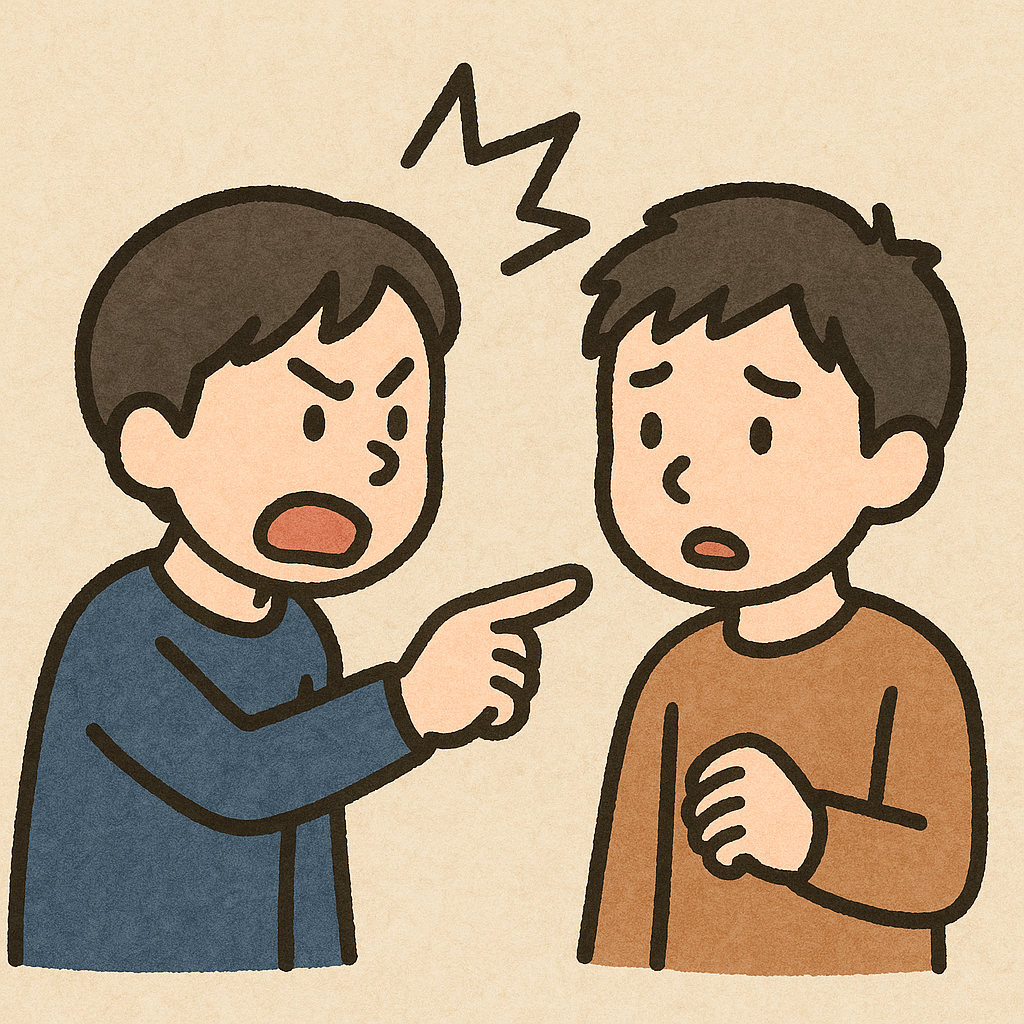
“言いがかりをつける” means to make unfounded accusations or complaints against someone, or to pick a quarrel with someone over trivial or fabricated reasons.
In English, this expression can be translated as:
- “to make false accusations”
- “to pick a fight (on false pretenses)”
- “to find fault (unreasonably)”
- “to make groundless complaints”
Key characteristics:
- The accusations or complaints have no real basis or justification
- Often done deliberately to harass, intimidate, or provoke someone
- The person making the “言いがかり” knows their claims are unreasonable but does so anyway
Example usage: “酔っ払いが通行人に言いがかりをつけた” = “A drunk person picked a fight with a passerby (on false pretenses)”
The closest single English idiom would be “to pick a fight” or “to pick on someone”, though these don’t fully capture the element of false accusations that “言いがかり” implies.
Example sentences
「言いがかりをつける」の例文20個を英訳付きで作成します。
- 酔っ払いが通行人に言いがかりをつけて、警察に通報された。 A drunk person made false accusations against a passerby and was reported to the police.
- 彼は些細なことで同僚に言いがかりをつける癖がある。 He has a habit of picking fights with his colleagues over trivial matters.
- 不良グループが生徒に言いがかりをつけて金を脅し取ろうとした。 A gang of delinquents tried to extort money by making groundless accusations against a student.
- 客がウェイターに言いがかりをつけて料金を払わずに出て行った。 A customer picked a quarrel with the waiter and left without paying.
- 隣人が騒音問題で言いがかりをつけてきたが、実際には音など出していない。 My neighbor made unfounded complaints about noise, but I haven’t actually made any sound.
- 上司は気に入らない部下に言いがかりをつけてパワハラをしている。 The boss harasses subordinates he doesn’t like by making false accusations against them.
- 彼女は嫉妬から友人に言いがかりをつけて関係を壊してしまった。 Out of jealousy, she picked a fight with her friend on false pretenses and ruined their relationship.
- クレーマーが店員に言いがかりをつけて返金を要求している。 A complainer is making groundless complaints to the staff and demanding a refund.
- ライバル会社が特許侵害だと言いがかりをつけてきた。 A rival company made false accusations of patent infringement against us.
- 彼は自分のミスを隠すために他人に言いがかりをつけた。 He made false accusations against others to cover up his own mistakes.
- チンピラが肩がぶつかったと言いがかりをつけてきた。 A thug picked a fight, claiming that I bumped into him.
- ネット上で匿名の人物が私に言いがかりをつけて誹謗中傷している。 An anonymous person online is slandering me by making unfounded accusations.
- 理不尽な言いがかりをつけられても、冷静に対応することが大切だ。 Even when someone makes unreasonable accusations against you, it’s important to respond calmly.
- 彼は言いがかりをつけるのが得意で、いつも周りとトラブルを起こしている。 He’s skilled at picking fights on false pretenses and is always causing trouble with others.
- その政治家は対立候補に言いがかりをつけて選挙戦を戦っている。 That politician is fighting the election campaign by making groundless accusations against his opponent.
- 悪質な業者が欠陥商品だと言いがかりをつけて高額な修理費を請求してきた。 A malicious vendor made false claims about defective products and charged excessive repair fees.
- 彼女は機嫌が悪いと誰かに言いがかりをつけて八つ当たりする。 When she’s in a bad mood, she takes it out on someone by picking fights over nothing.
- 言いがかりをつけられたら、毅然とした態度で反論すべきだ。 If someone makes false accusations against you, you should firmly refute them.
- 暴力団が店に言いがかりをつけてみかじめ料を要求した。 The yakuza made groundless complaints to the shop and demanded protection money.
- SNSで言いがかりをつける人は無視するのが一番だ。 It’s best to ignore people who make unfounded accusations on social media.
Conversation example
「言いがかりをつける」を使った会話例を英訳付きで作成します。
会話例1: 職場でのトラブル
A: 田中さん、さっき山田さんに怒られてたね。何があったの? A: Tanaka-san, I saw Yamada-san getting angry at you earlier. What happened?
B: いや、また言いがかりをつけられたんだよ。書類の提出が遅れたって。 B: Well, he made false accusations against me again. He said I was late submitting documents.
A: でも、昨日出したんじゃなかった? A: But didn’t you submit them yesterday?
B: そうなんだよ!彼は気に入らない人には何でも言いがかりをつけるんだ。 B: Exactly! He picks fights with people he doesn’t like over anything.
会話例2: 街でのトラブル
A: 大丈夫?顔色が悪いけど。 A: Are you okay? You look pale.
B: さっき駅前で酔っ払いに言いがかりをつけられて怖かった。 B: A drunk person just picked a fight with me on false pretenses near the station. It was scary.
A: え、何て言われたの? A: What? What did they say?
B: 「お前、俺を見ただろう」って。見てないのに。 B: They said, “You looked at me, didn’t you?” I didn’t even look at them.
A: それ完全に言いがかりだね。警察呼んだ? A: That’s completely groundless. Did you call the police?
会話例3: クレーマー対応
店長: お疲れ様。さっきのお客さん、すごかったね。 Manager: Good work. That customer earlier was intense, wasn’t it?
店員: はい…。商品に問題ないのに言いがかりをつけられて。 Employee: Yes… They made unfounded complaints even though there was nothing wrong with the product.
店長: ああいうクレーマーは言いがかりをつけて返金を狙ってるんだよ。 Manager: Those kinds of complainers make false accusations to get refunds.
店員: どう対応すればよかったんでしょうか? Employee: How should I have handled it?
店長: 言いがかりには毅然とした態度で、でも丁寧に対応することが大事だよ。 Manager: It’s important to respond to groundless complaints with a firm but polite attitude.
会話例4: 学校でのいじめ
母: 最近元気ないけど、学校で何かあった? Mother: You haven’t seemed yourself lately. Is something going on at school?
息子: 実は…クラスの不良グループに言いがかりをつけられてて。 Son: Actually… a gang of bullies has been picking fights with me on false pretenses.
母: どんな言いがかり? Mother: What kind of accusations?
息子: 「俺の悪口言っただろう」とか。言ってないのに。 Son: Things like “You talked bad about me, didn’t you?” I never did.
母: それはいじめよ。先生に相談しましょう。言いがかりをつけられて黙っている必要はないわ。 Mother: That’s bullying. Let’s talk to your teacher. You don’t need to stay silent when someone makes false accusations against you.
会話例5: ビジネストラブル
A: 競合他社の件、どうなった? A: What happened with the competitor’s issue?
B: あれは完全に言いがかりだったよ。特許侵害なんてしてない。 B: That was completely groundless. We didn’t infringe on any patents.
A: 向こうは何が目的で言いがかりをつけてきたんだろう? A: What was their purpose in making false accusations?
B: うちの新製品の発売を遅らせたかったんだと思う。 B: I think they wanted to delay the launch of our new product.
A: 悪質だね。法的措置は取るの? A: That’s malicious. Are you taking legal action?
B: ああ、こういう言いがかりは放置できないからね。 B: Yes, we can’t let these kinds of groundless accusations slide.
